Application
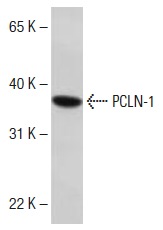
Western blot analysis of PCLN-1 expression in human fetal lung tissue extract.| Product Name | PCLN-1 Antibody (D-23) |
|---|---|
| Antibody Type | Primary Antibodies |
| Antigen Alias | recommended for detection of PCLN-1 of human origin by WB, IP and ELISA |
| Modification Notes | Tight junctions mediate the regulation of the paracellular pathway between epithelial and endothelial cells. They form close connections to eliminate the extracellular space and regulate the flow of solutes between cells. The human gene PCLN-1 (paracellin-1) is related to the claudin family of integral membrane proteins, which localize to tight junctions. PCLN-1 contains four transmembrane domains and intracellular amino and carboxy termini, characteristic of the other claudin family members, and is detected only at the tight junctions of kidney tissue. PCLN-1 forms an intercellular pore and controls the resorption of magnesium and calcium in the thick ascending limb of Henle (TAL). Mutations in PCLN-1 cause renal magnesium wasting, which may contribute to a rare autosomal recessive disease, renal hypomagnesemia with hypercalciuria and nephrocalcinosis. |
| Clonality | Polyclonal |
|---|---|
| Isotype | IgG |
| Host Species | Rabbit |
| Tested Applications | WBIPELISA |
| WB:1:500~1:2000 IP:1:100~1:500 Notes:Optimal dilutions/concentrations should be determined by the researcher. |
|
| Species Reactivity | HumanMouseRat |
| Concentration | 1mg/ml |
| Purification | Affinity purified |
| Alternative Names | recommended for detection of PCLN-1 of human origin by WB IP and ELISA |
|---|---|
| Tissue Specificity | recommended for detection of PCLN-1 of human origin by WB, IP and ELISA |
| Entrez Gene | 10686 |
|---|
Application
Western blot analysis of PCLN-1 expression in human fetal lung tissue extract.| Application Notes | WB:1:500~1:2000 IP:1:100~1:500 Notes:Optimal dilutions/concentrations should be determined by the researcher. |
|---|
| Form | Liquid |
|---|---|
| Storage Instructions | For short-term storage, store at 4° C. For long-term storage, aliquot and store at -20ºC or below. Avoid multiple freeze-thaw cycles. |
| Storage Buffer | phosphate buffered saline , pH 7.4, 150mM NaCl, 0.02% sodium azide and 50% glycerol. |


