Application
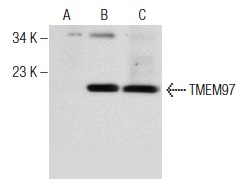
Western blot analysis of TMEM97 expression in non-transfected: (A) and mouse TMEM97 transfected: (B) 293T whole cell lysates and mouse pancreas tissue extract (C).| Product Name | TMEM97 Antibody (S-14) |
|---|---|
| Antibody Type | Primary Antibodies |
| Antigen Alias | epitope mapping within an extracellular domain of TMEM97 of human origin |
| Modification Notes | MAC30, also known as TMEM97 (transmembrane protein 97), is a 176 amino acid multi-pass membrane protein that is widely expressed in normal tissues and is upregulated in pancreatic, renal, breast, colon and meningioma cancers, suggesting a role in tumorigenesis. The gene encoding MAC30 maps to human chromosome 17, which comprises over 2.5% of the human genome and encodes over 1,200 genes. Two key tumor suppressor genes are associated with chromosome 17, namely, p53 and BRCA1. Tumor suppressor p53 is necessary for maintenance of cellular genetic integrity by moderating cell fate through DNA repair versus cell death. Malfunction or loss of p53 expression is associated with malignant cell growth and Li-Fraumeni syndrome. Like p53, BRCA1 is directly involved in DNA repair, though specifically it is recognized as a genetic determinant of early onset breast cancer and predisposition to cancers of the ovary, colon, prostate gland and fallopian tubes. |
| Clonality | Polyclonal |
|---|---|
| Isotype | IgG |
| Host Species | Rabbit |
| Tested Applications | WBIPIFELISA |
| recommended for detection of TMEM97 of mouse and human origin by WB, IP, IF and ELISA: |
|
| Species Reactivity | HumanMouseRat |
| Concentration | 1mg/ml |
| Purification | Affinity purified |
| Alternative Names | epitope mapping within an extracellular domain of TMEM97 of human origin |
|---|---|
| Tissue Specificity | epitope mapping within an extracellular domain of TMEM97 of human origin |
| Entrez Gene | 27346 |
|---|
Application
Western blot analysis of TMEM97 expression in non-transfected: (A) and mouse TMEM97 transfected: (B) 293T whole cell lysates and mouse pancreas tissue extract (C).| Application Notes | recommended for detection of TMEM97 of mouse and human origin by WB, IP, IF and ELISA: |
|---|
| Form | Liquid |
|---|---|
| Storage Instructions | For short-term storage, store at 4° C. For long-term storage, aliquot and store at -20ºC or below. Avoid multiple freeze-thaw cycles. |
| Storage Buffer | phosphate buffered saline , pH 7.4, 150mM NaCl, 0.02% sodium azide and 50% glycerol. |


