Application
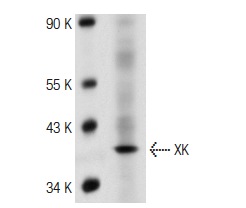
Western blot analysis of XK expression in mouse liver tissue extract.| Product Name | XK Antibody (H-50) |
|---|---|
| Antibody Type | Primary Antibodies |
| Antigen Alias | epitope corresponding to amino acids 1-50 mapping at the N-terminus of XK of human origin |
| Modification Notes | Kell and XK are two covalently linked plasma membrane proteins that constitute the Kell blood group system, a group of antigens on the surface of red blood cells that are important determinants of blood type and targets for autoimmune or alloimmune diseases. XK is a 444 amino acid protein that spans the membrane 10 times and carries the ubiquitous antigen, Kx, which determines blood type. XK also plays a role in the sodium-dependent membrane transport of oligopeptides and neutral amino acids. XK is expressed at high levels in brain, heart, skeletal muscle and pancreas. Defects in the XK gene cause McLeod syndrome (MLS), an X-linked multisystem disorder characterized by abnormalities in neuromuscular and hematopoietic system such as acanthocytic red blood cells and late-onset forms of muscular dystrophy with nerve abnormalities. |
| Clonality | Polyclonal |
|---|---|
| Isotype | IgG |
| Host Species | Rabbit |
| Tested Applications | WBIPIFELISA |
| recommended for detection of XK of mouse, rat and human origin by WB, IP, IF and ELISA also reactive with additional species, including canine and porcine: |
|
| Species Reactivity | HumanMouseRat |
| Concentration | 1mg/ml |
| Purification | Affinity purified |
| Alternative Names | epitope corresponding to amino acids 1-50 mapping at the N-terminus of XK of human origin |
|---|---|
| Tissue Specificity | epitope corresponding to amino acids 1-50 mapping at the N-terminus of XK of human origin |
Application
Western blot analysis of XK expression in mouse liver tissue extract.| Application Notes | recommended for detection of XK of mouse, rat and human origin by WB, IP, IF and ELISA also reactive with additional species, including canine and porcine: |
|---|
| Form | Liquid |
|---|---|
| Storage Instructions | For short-term storage, store at 4° C. For long-term storage, aliquot and store at -20ºC or below. Avoid multiple freeze-thaw cycles. |
| Storage Buffer | phosphate buffered saline , pH 7.4, 150mM NaCl, 0.02% sodium azide and 50% glycerol. |


