Application
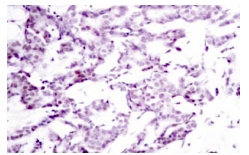
Immunoperoxidase staining of formalin-fixed, paraffin-embedded human breast carcinoma tissue showing nuclear staining.| Product Name | p-Stat6 Antibody (Thr 645) |
|---|---|
| Antibody Type | Primary Antibodies |
| Antigen Alias | epitope corresponding to phosphorylated Thr 645 of Stat6 of human origin |
| Modification | Phosphoralated |
| Modification Notes | Membrane receptor signaling by various ligands, including interferons and growth hormones like EGF, induces activation of Jak kinases, which then leads to tyrosine phosphorylation of the various STAT transcription factors (1,2). Activated STAT proteins form dimers, translocate to the nucleus, bind to specific response elements in promoters of target genes, and transcriptionally activate these genes (3). Stimulation of susceptible cells by interleukin-4 (IL-4) leads to activation of Stat6 through the phosphorylation of tyrosine and serine residues (4,5). IL-4 activation of Stat6 also leads to dimerization, which directs Stat6 to the nucleus, and renders it a sequence-specific transcription factor (4,6). Stat6 is also tyrosine-phosphorylated in response to IL-15, and is involved in IL-4 activated signaling pathways (5,7). The activation of Stat6 by JAK family protein tyrosine kinases is essential for the full response of cells to IL-4 (8). |
| Clonality | Polyclonal |
|---|---|
| Isotype | IgG |
| Host Species | Rabbit |
| Tested Applications | IFIHC |
| recommended for detection of Thr 645 phosphorylated Stat6 of h origin by IF and IHC(P): |
|
| Species Reactivity | HumanMouseRat |
| Concentration | 1mg/ml |
| Purification | Affinity purified |
| Alternative Names | epitope corresponding to phosphorylated Thr 645 of Stat6 of human origin |
|---|---|
| Tissue Specificity | epitope corresponding to phosphorylated Thr 645 of Stat6 of human origin |
| Entrez Gene | 6778 |
|---|
Application
Immunoperoxidase staining of formalin-fixed, paraffin-embedded human breast carcinoma tissue showing nuclear staining.| Application Notes | recommended for detection of Thr 645 phosphorylated Stat6 of h origin by IF and IHC(P): |
|---|
| Form | Liquid |
|---|---|
| Storage Instructions | For short-term storage, store at 4° C. For long-term storage, aliquot and store at -20ºC or below. Avoid multiple freeze-thaw cycles. |
| Storage Buffer | phosphate buffered saline , pH 7.4, 150mM NaCl, 0.02% sodium azide and 50% glycerol. |


