Application
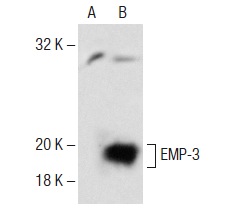
Western blot analysis of EMP-3 expression in non-transfected: (A) and human EMP-3 transfected: (B) 293 whole cell lysates.Application
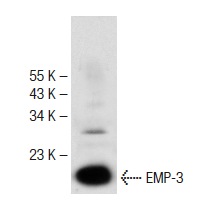
Western blot analysis of EMP-3 expression in C32 whole cell lysate.| Product Name | EMP-3 Antibody (H-130) |
|---|---|
| Antibody Type | Primary Antibodies |
| Antigen Alias | epitope corresponding to amino acids 11-140 mapping within an internal region of EMP-3 of human origin |
| Modification Notes | EMP-3 (epithelial membrane protein 3), also known as YMP, is a 163 amino acid multi-pass membrane protein that contains two N-linked glycosylation sites and four transmembrane domains. Expressed ubiquitously with highest expression in peripheral blood leukocytes, EMP-3 is a myelin-related protein that is thought to be involved in cell-cell interactions and cell proliferation. The gene encoding EMP-2 is implicated as a possible tumor suppressor that silences CpG promotor action, thereby inhibiting the growth of neuroblastomas and gliomas. Overexpression of EMP-3, however, may be associated with the development of oligodendroglial tumors (tumors that develop on the myelin producing cells of the central nervous system). Its ability to both repress and induce tumor formation suggests that normal amounts of EMP-3 keep tumor activity low, while increased EMP-3 expression may play a role in carcinogenesis. |
| Clonality | Polyclonal |
|---|---|
| Isotype | IgG |
| Host Species | Rabbit |
| Tested Applications | WBIPIFELISA |
| recommended for detection of EMP-3 of mouse, rat and human origin by WB, IP, IF and ELISA: |
|
| Species Reactivity | HumanMouseRat |
| Concentration | 1mg/ml |
| Purification | Affinity purified |
| Alternative Names | epitope corresponding to amino acids 11-140 mapping within an internal region of EMP-3 of human origin |
|---|---|
| Tissue Specificity | epitope corresponding to amino acids 11-140 mapping within an internal region of EMP-3 of human origin |
Application
Western blot analysis of EMP-3 expression in non-transfected: (A) and human EMP-3 transfected: (B) 293 whole cell lysates.
Application
Western blot analysis of EMP-3 expression in C32 whole cell lysate.| Application Notes | recommended for detection of EMP-3 of mouse, rat and human origin by WB, IP, IF and ELISA: |
|---|
| Form | Liquid |
|---|---|
| Storage Instructions | For short-term storage, store at 4° C. For long-term storage, aliquot and store at -20ºC or below. Avoid multiple freeze-thaw cycles. |
| Storage Buffer | phosphate buffered saline , pH 7.4, 150mM NaCl, 0.02% sodium azide and 50% glycerol. |


