Application
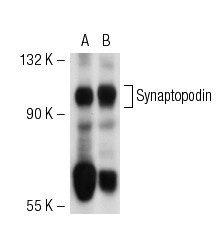
Western blot analysis of Synaptopodin expression in mouse brain (A) and rat brain (B) tissue extracts.| Product Name | Synaptopodin Antibody (H-140) |
|---|---|
| Antibody Type | Primary Antibodies |
| Antigen Alias | epitope corresponding to amino acids 781-920 mapping near the C-terminus of Synaptopodin of human origin |
| Modification Notes | Dendritic spines are dynamic structures that alter their shape and size by remodeling the cytoskeleton in response to changes in synaptic activity. Synaptopodin is a proline-rich, actin-associated protein expressed in mature dendritic spines and renal podocytes. Synaptopodin appears to play a role in the actin-based plasticity of spines by linking actin to the spine apparatus. In the principal neurons of the hippocampus, synaptopodin preferentially localizes to the spine neck. Synaptopodin expression increases during long-term potentiation (LTP) in vivo and elevated levels of synaptopodin correlate with the persistence of LTP. In renal podocytes, synaptopodin localizes to the foot processes. Synaptopodin is absent in the sclerosed glomeruli of diopathic nephrotic syndrome. Myopodin, a member of the synaptopodin family, is expressed in skeletal muscle and cardiac muscle. Like synaptopodin, myopodin associates with actin and appears to display actin-bundling activity. Myopodin is frequently absent in invasive prostate cancer and may serve as a prognostic marker for prostate cancers. |
| Clonality | Polyclonal |
|---|---|
| Isotype | IgG |
| Host Species | Rabbit |
| Tested Applications | WBIPIFELISA |
| recommended for detection of Synaptopodin of mouse, rat and human origin by WB, IP, IF and ELISA also reactive with additional species, including canine and bovine: |
|
| Species Reactivity | HumanMouseRat |
| Concentration | 1mg/ml |
| Purification | Affinity purified |
| Alternative Names | epitope corresponding to amino acids 781-920 mapping near the C-terminus of Synaptopodin of human origin |
|---|---|
| Tissue Specificity | epitope corresponding to amino acids 781-920 mapping near the C-terminus of Synaptopodin of human origin |
| Entrez Gene | 11346 |
|---|
Application
Western blot analysis of Synaptopodin expression in mouse brain (A) and rat brain (B) tissue extracts.| Application Notes | recommended for detection of Synaptopodin of mouse, rat and human origin by WB, IP, IF and ELISA also reactive with additional species, including canine and bovine: |
|---|
| Form | Liquid |
|---|---|
| Storage Instructions | For short-term storage, store at 4° C. For long-term storage, aliquot and store at -20ºC or below. Avoid multiple freeze-thaw cycles. |
| Storage Buffer | phosphate buffered saline , pH 7.4, 150mM NaCl, 0.02% sodium azide and 50% glycerol. |


