Application
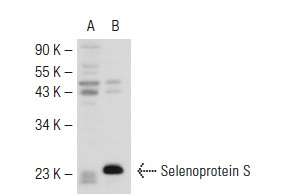
Western blot analysis of Selenoprotein S expression in non-transfected: (A) and mouse Selenoprotein S transfected: (B) 293T whole cell lysates.| Product Name | Selenoprotein S Antibody (H-189) |
|---|---|
| Antibody Type | Primary Antibodies |
| Modification Notes | Selenium is an essential trace element that is incorporated as selenocysteine into the primary structure of Selenoproteins. Nutritional deficiency of selenium decreases Selenoprotein concentrations and leads to pathologic conditions. Most of the known Selenoproteins are members of the glutathione peroxidase or iodothyronine deiodinase families. Selenoprotein S, also known as VIMP or SELS, is a 189 amino acid single-pass membrane protein that localizes to the endoplasmic reticulum (ER) and contains a selenocysteine (Sec) residue at its active site. Interacting with Derlin-1 and VCP, Selenoprotein S is involved in the degradation of misfolded ER proteins, specifically participating in the transfer of misfolded proteins from the ER to the cytosol for subsequent proteasomal degradation. Aberrant expression of Selenoprotein S is associated with diabetes, cardiovascular disease and rheumatoid arthritis. |
| Clonality | Polyclonal |
|---|---|
| Isotype | IgG |
| Host Species | Rabbit |
| Tested Applications | WBIPIFELISA |
| recommended for detection of Selenoprotein S of mouse, rat and human origin by WB, IP, IF and ELISA also reactive with additional species, including equine, canine, bovine and porcine | |
| Species Reactivity | HumanMouseRat |
| Concentration | 1mg/ml |
| Purification | Affinity purified |
| Alternative Names | epitope corresponding to amino acids 1-189 of Selenoprotein S of human origin |
|---|---|
| Tissue Specificity | epitope corresponding to amino acids 1-189 of Selenoprotein S of human origin |
| Entrez Gene | 55829 |
|---|
Application
Western blot analysis of Selenoprotein S expression in non-transfected: (A) and mouse Selenoprotein S transfected: (B) 293T whole cell lysates.| Application Notes | recommended for detection of Selenoprotein S of mouse, rat and human origin by WB, IP, IF and ELISA also reactive with additional species, including equine, canine, bovine and porcine |
|---|
| Form | Liquid |
|---|---|
| Storage Instructions | For short-term storage, store at 4° C. For long-term storage, aliquot and store at -20ºC or below. Avoid multiple freeze-thaw cycles. |
| Storage Buffer | phosphate buffered saline , pH 7.4, 150mM NaCl, 0.02% sodium azide and 50% glycerol. |


