Application
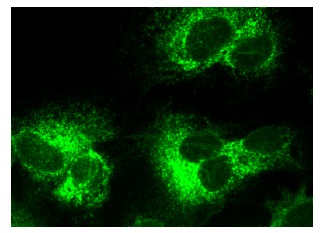
Immunofluorescence staining of formalin-fixed Hep G2 cells showing cytoplasmic localization.| Product Name | ERp5 Antibody (H-249) |
|---|---|
| Antibody Type | Primary Antibodies |
| Antigen Alias | epitope corresponding to amino acids 192-440 mapping at the C-terminus of ERp5 of human origin |
| Modification Notes | Endoplasmic reticulum proteins (ERps) are widely expressed proteins that localize to the ER and may act as proteases, protein disulfide isomerases, thiol-disulfide oxidases or phospholipases. ERp5, also known as PDIA6 (protein disulfide isomerase family A, member 6) or TXNDC7 is a 440 amino acid protein that contains two thioredoxin domains and belongs to the protein disulfide isomerase family. Localized to the melanosome, as well as to the lumen of the endoplasmic reticulum, ERp5 functions to catalyze the rearrangement of disulfide bonds in a variety of different proteins. Via its catalytic activity, ERp5 is able to reduce the disulfide bond that binds MICA to tumor cells, thereby releasing MICA and reducing the rate of tumor expansion. Multiple isoforms of ERp5 exist due to alternative splicing events. |
| Clonality | Polyclonal |
|---|---|
| Isotype | IgG |
| Host Species | Rabbit |
| Tested Applications | WBIPIFELISA |
| recommended for detection of ERp5 of mouse, rat and human origin by WB, IP, IF and ELISA non cross-reactive with other ERp family members also reactive with additional species, including equine, canine, bovine, porcine and avian: |
|
| Species Reactivity | HumanMouseRat |
| Concentration | 1mg/ml |
| Purification | Affinity purified |
| Alternative Names | epitope corresponding to amino acids 192-440 mapping at the C-terminus of ERp5 of human origin |
|---|---|
| Tissue Specificity | epitope corresponding to amino acids 192-440 mapping at the C-terminus of ERp5 of human origin |
| Entrez Gene | 10130 |
|---|
Application
Immunofluorescence staining of formalin-fixed Hep G2 cells showing cytoplasmic localization.| Application Notes | recommended for detection of ERp5 of mouse, rat and human origin by WB, IP, IF and ELISA non cross-reactive with other ERp family members also reactive with additional species, including equine, canine, bovine, porcine and avian: |
|---|
| Form | Liquid |
|---|---|
| Storage Instructions | For short-term storage, store at 4° C. For long-term storage, aliquot and store at -20ºC or below. Avoid multiple freeze-thaw cycles. |
| Storage Buffer | phosphate buffered saline , pH 7.4, 150mM NaCl, 0.02% sodium azide and 50% glycerol. |


