Application
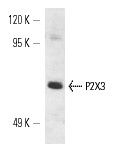
Western blot analysis of P2X3 expression in MTE1D whole cell lysate.| Product Name | P2X3 Antibody (H-60) |
|---|---|
| Antibody Type | Primary Antibodies |
| Antigen Alias | epitope corresponding to amino acids 338-397 mapping at the C-terminus of P2X3 of human origin |
| Modification Notes | The P2X receptor family is comprised of ligand-gated ion channels that allow for the increased permeability of calcium into the cell in response to extracellular ATP. The seven P2X receptors, P2X1-P2X7, form either homomeric or heteromeric channels or both. They are characterized by intracellular amino- and carboxy-termini. P2X receptors are expressed in a wide variety of tissues, including neurons, prostate, bladder, pancreas, colon, testis and ovary. The major function of the P2X receptors is to mediate synaptic transmissions between neurons and to other tissues via the binding of extracellular ATP, which acts as a neurotransmitter. The P2X receptors may be involved in the onset of necrosis or apoptosis after prolonged exposure to high concentrations of extracellular ATP. |
| Clonality | Polyclonal |
|---|---|
| Isotype | IgG |
| Host Species | Rabbit |
| Tested Applications | WBIPIFELISA |
| recommended for detection of P2X3 of mouse, rat and human origin by WB, IP, IF and ELISA also reactive with additional species, including equine, canine and porcine: |
|
| Species Reactivity | HumanMouseRat |
| Concentration | 1mg/ml |
| Purification | Affinity purified |
| Alternative Names | epitope corresponding to amino acids 338-397 mapping at the C-terminus of P2X3 of human origin |
|---|---|
| Tissue Specificity | epitope corresponding to amino acids 338-397 mapping at the C-terminus of P2X3 of human origin |
| Entrez Gene | 5024 |
|---|
Application
Western blot analysis of P2X3 expression in MTE1D whole cell lysate.| Application Notes | recommended for detection of P2X3 of mouse, rat and human origin by WB, IP, IF and ELISA also reactive with additional species, including equine, canine and porcine: |
|---|
| Form | Liquid |
|---|---|
| Storage Instructions | For short-term storage, store at 4° C. For long-term storage, aliquot and store at -20ºC or below. Avoid multiple freeze-thaw cycles. |
| Storage Buffer | phosphate buffered saline , pH 7.4, 150mM NaCl, 0.02% sodium azide and 50% glycerol. |


