Application
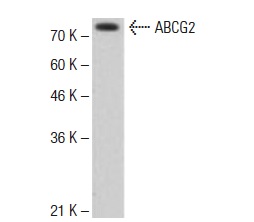
Western blot analysis of ABCG2 expression in Hep G2 whole cell lysate.Application
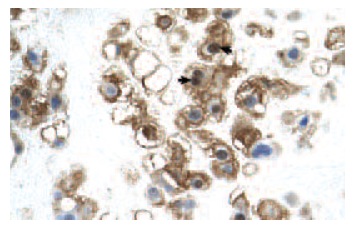
Immunoperoxidase staining of formalin-fixed, paraffin-embedded human placenta tissue showing cytoplasmic and membrane localization.| Product Name | ABCG2 Antibody (B-25) |
|---|---|
| Antibody Type | Primary Antibodies |
| Modification Notes | ATP-binding cassette (ABC) transporters are an evolutionarily conserved family of proteins that catalyze the transport of molecules across extracellular and intracellular membranes through the energy of ATP hydrolysis. The ABC half-transporter, ABCG2, is also known as placenta-specific ABC transporter and breast cancer resistance protein (BCRP1). ABCG2 confers resistance for a variety of chemotherapeutic agents, including anthracyclines, mitoxantrone, bisantrene and topotecan. Under normal conditions, ABCG2 may serve a protective function by removing toxins from the cell, and plays an important role in regulating stem cell differentiation. ABCG2 is responsible for the side population (SP) phenotype and is widely expressed in a large variety of stem cells, making it an important stem cell marker. ABCG2 may have N-linked glycosylation and may dimerize in vivo. ABCG2 is abundantly expressed in placenta, liver, intestine and stem cells. |
| Clonality | Polyclonal |
|---|---|
| Isotype | IgG |
| Host Species | Rabbit |
| Tested Applications | WBIPIFIHCELISA |
| See 1 citations for ABCG2Antibody (B-25) | |
| Species Reactivity | HumanMouseRat |
| Concentration | 1mg/ml |
| Purification | Affinity purified |
| Alternative Names | recommended for detection of ABCG2 of mouse rat and human origin by WB IP IF IHC(P) and ELISA |
|---|---|
| Tissue Specificity | recommended for detection of ABCG2 of mouse, rat and human origin by WB, IP, IF, IHC(P) and ELISA |
| Entrez Gene | 9429 |
|---|
Application
Western blot analysis of ABCG2 expression in Hep G2 whole cell lysate.
Application
Immunoperoxidase staining of formalin-fixed, paraffin-embedded human placenta tissue showing cytoplasmic and membrane localization.| Application Notes | See 1 citations for ABCG2Antibody (B-25) |
|---|
| Form | Liquid |
|---|---|
| Storage Instructions | For short-term storage, store at 4° C. For long-term storage, aliquot and store at -20ºC or below. Avoid multiple freeze-thaw cycles. |
| Storage Buffer | phosphate buffered saline , pH 7.4, 150mM NaCl, 0.02% sodium azide and 50% glycerol. |


