Application
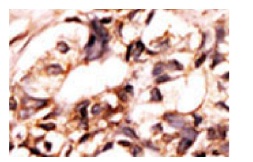
Immunoperoxidase staining of formalin fixed, paraffin-embedded human cancer tissue showing cytoplasmic staining.| Product Name | p-Daxx Antibody (Ser 213) |
|---|---|
| Antibody Type | Primary Antibodies |
| Antigen Alias | recommended for detection of Ser 213 phosphorylated Daxx of human origin by WB, IP, IF, IHC(P) and ELISA |
| Modification | Phosphoralated |
| Modification Notes | Activation of the cell surface receptor FAS by FAS ligand leads to the initiation of apoptosis, a process necessary for the regulation of the immune system and tissue homeostasis. FAS-mediated apoptosis appears to involve a number of divergent and overlapping pathways. Daxx appears to be a central component of a FAS-mediated apoptotic pathway involving the activation of Jun N-terminal kinase (JNK). Although Daxx itself does not contain a death domain, it specifically binds to the death domain of FAS. Overexpression of Daxx activates the JNK pathway and enhances FAS-mediated apoptosis. The Daxx apoptotic pathway acts cooperatively with but is distinct from the FAS-mediated pathway that involves interactions between the death domain-containing protein FADD and the cysteine protease FLICE. Unlike the FAS-FADD-FLICE pathway, the Daxx pathway is sensitive to the apoptotic inhibitor protein Bcl-2. Upon DNA damage, human Daxx may be phosphorylated at Ser 213. |
| Clonality | Polyclonal |
|---|---|
| Isotype | IgG |
| Host Species | Rabbit |
| Tested Applications | WBIPIFIHCELISA |
| WB:1:500~1:2000 IP:1:100~1:500 IF:1:200~1:500 IHC:1:50~1:200 Notes:Optimal dilutions/concentrations should be determined by the researcher. |
|
| Species Reactivity | HumanMouseRat |
| Concentration | 1mg/ml |
| Purification | Affinity purified |
| Alternative Names | recommended for detection of Ser 213 phosphorylated Daxx of human origin by WB IP IF IHC(P) and ELISA |
|---|---|
| Tissue Specificity | recommended for detection of Ser 213 phosphorylated Daxx of human origin by WB, IP, IF, IHC(P) and ELISA |
| Entrez Gene | 1616 |
|---|
Application
Immunoperoxidase staining of formalin fixed, paraffin-embedded human cancer tissue showing cytoplasmic staining.| Application Notes | WB:1:500~1:2000 IP:1:100~1:500 IF:1:200~1:500 IHC:1:50~1:200 Notes:Optimal dilutions/concentrations should be determined by the researcher. |
|---|
| Form | Liquid |
|---|---|
| Storage Instructions | For short-term storage, store at 4° C. For long-term storage, aliquot and store at -20ºC or below. Avoid multiple freeze-thaw cycles. |
| Storage Buffer | phosphate buffered saline , pH 7.4, 150mM NaCl, 0.02% sodium azide and 50% glycerol. |


