Application
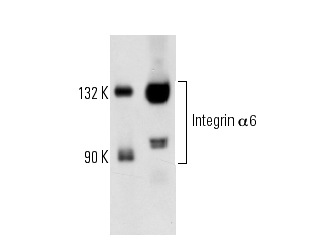
Western blot analysis of FBP21 expression in SK-MEL-28 (A), Jurkat (B), NIH/3T3 (C), KNRK (D) and K-562 (E) nuclear extracts and HEK293 whole cell lysate (F).| Product Name | FBP21 Antibody (N-16) |
|---|---|
| Antibody Type | Primary Antibodies |
| Antigen Alias | epitope mapping near the N-terminus of FBP21 of human origin |
| Modification Notes | WW domains mediate protein-protein interactions through binding to short proline-rich motifs within their respective ligands. The WW domain is composed of approximately 40 amino acids that fold as a stable, triple stranded beta-sheet without disulfide bridges or cofactors. Proteins containing the WW domain are found in a wide range of signaling proteins, which can be localized within the cytoplasm or the nucleus. FBP21, also known as WW domain-binding protein 4, is a 376 amino acid protein that contains two WW domains and is characterized as a spliceosome-associated protein. FBP21 localizes to nucleus speckles and is thought to play a role in cross-intron bridging of U1 and U2 snRNPs in the mammalian A complex. Specifically, FBP21 interacts via its WW domains with the proline-rich domain of Sam 68 and also binds splicing factors Sm B/B', hnRNP C1/C2 and splicing factor 1. |
| Clonality | Polyclonal |
|---|---|
| Isotype | IgG |
| Host Species | Rabbit |
| Tested Applications | WBIPIFELISA |
| recommended for detection of FBP21 of mouse, rat and human origin by WB, IP, IF and ELISA also reactive with additional species, including equine, canine, bovine and avian: |
|
| Species Reactivity | HumanMouseRat |
| Concentration | 1mg/ml |
| Purification | Affinity purified |
| Alternative Names | epitope mapping near the N-terminus of FBP21 of human origin |
|---|---|
| Tissue Specificity | epitope mapping near the N-terminus of FBP21 of human origin |
| Entrez Gene | 11193 |
|---|
Application
Western blot analysis of FBP21 expression in SK-MEL-28 (A), Jurkat (B), NIH/3T3 (C), KNRK (D) and K-562 (E) nuclear extracts and HEK293 whole cell lysate (F).| Application Notes | recommended for detection of FBP21 of mouse, rat and human origin by WB, IP, IF and ELISA also reactive with additional species, including equine, canine, bovine and avian: |
|---|
| Form | Liquid |
|---|---|
| Storage Instructions | For short-term storage, store at 4° C. For long-term storage, aliquot and store at -20ºC or below. Avoid multiple freeze-thaw cycles. |
| Storage Buffer | phosphate buffered saline , pH 7.4, 150mM NaCl, 0.02% sodium azide and 50% glycerol. |


