Application
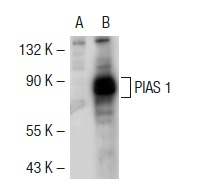
Western blot analysis of PIAS 1 expression in non-transfected: (A) and mouse PIAS 1 transfected: (B) 293T whole cell lysates.Application
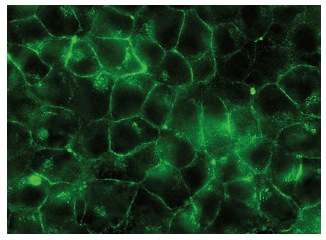
Immunofluorescence staining of methanol-fixed Daudi cells showing nuclear localization.| Product Name | PIAS 1 Antibody (H-175) |
|---|---|
| Antibody Type | Primary Antibodies |
| Modification Notes | The IL-6-type family of cytokines, which includes IL-6 as well as a number of similar cytokines and growth factors, plays a significant role in regulating gene activation, proliferation and differentiation (1). Transcription factors of the STAT family are known to be involved in this signal transduction pathway, undergoing phosphorylation, dimerization, and translocation to the nucleus upon activation (2,3). PIAS 1, for protein inhibitor of activated Stat1 (also designated Gu/RNA helicase II binding protein), binds specifically to Stat1, blocking Stat1 DNA-binding activity and inhibiting Stat1-mediated gene activation (4). PIAS 1 also binds to the Gu/RNA helicase II enzyme, leading to the proteolytic cleavage of Gu/RH-II (5). PIAS 3 similarly binds specifically to Stat3, blocking Stat3 DNA-binding activity and inhibiting Stat3-mediated gene activation (6). |
| Clonality | Polyclonal |
|---|---|
| Isotype | IgG |
| Host Species | Rabbit |
| Tested Applications | WBIPIFELISA |
| recommended for detection of PIAS 1 of mouse, rat and human origin by WB, IP, IF and ELISA also reactive with additional species, including equine, canine and porcine | |
| Species Reactivity | HumanMouseRat |
| Concentration | 1mg/ml |
| Purification | Affinity purified |
| Alternative Names | epitope corresponding to amino acids 471-645 mapping near the C-terminus of PIAS 1 of human origin |
|---|---|
| Tissue Specificity | epitope corresponding to amino acids 471-645 mapping near the C-terminus of PIAS 1 of human origin |
| Entrez Gene | 8554 |
|---|
Application
Western blot analysis of PIAS 1 expression in non-transfected: (A) and mouse PIAS 1 transfected: (B) 293T whole cell lysates.
Application
Immunofluorescence staining of methanol-fixed Daudi cells showing nuclear localization.| Application Notes | recommended for detection of PIAS 1 of mouse, rat and human origin by WB, IP, IF and ELISA also reactive with additional species, including equine, canine and porcine |
|---|
| Form | Liquid |
|---|---|
| Storage Instructions | For short-term storage, store at 4° C. For long-term storage, aliquot and store at -20ºC or below. Avoid multiple freeze-thaw cycles. |
| Storage Buffer | phosphate buffered saline , pH 7.4, 150mM NaCl, 0.02% sodium azide and 50% glycerol. |


