Application
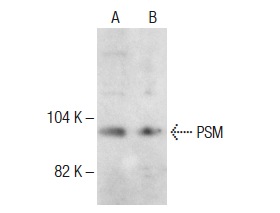
Western blot analysis of AK2 expression in HeLa whole cell lysate.| Product Name | AK2 Antibody (H-65) |
|---|---|
| Antibody Type | Primary Antibodies |
| Modification Notes | Adenylate kinases 1-5 (designated AK1-5) are a set of enzymes that regulate the phosphorylation state of intracellular adenine nucleotides, which are the principle high-energy phosphoryl-carrying molecules in living cells. AKs influence metabolic signals, which include gene expression, ion channel activity and protein kinase-mediated signaling, by catalyzing phosphoryl transfer between adenine nucleotides (AMP, ADP, ATP). Inherited mutations leading to AK deficiencies in erythrocytes have been implicated in hemolytic anemia. AK2 is found in the mitochondria of liver and heart tissues and is the only AK that localizes to the mitochondrial intermembrane space. In apoptotic cells, AK2 is the only AK that translocates into the cytosol concomitantly with cytochrome c, suggesting that only intermembrane proteins are released from mitochondria during the early stages of apoptosis. |
| Clonality | Polyclonal |
|---|---|
| Isotype | IgG |
| Host Species | Rabbit |
| Tested Applications | WBIPIFELISA |
| recommended for detection of AK2 of mouse, rat and human origin by WB, IP, IF and ELISA also reactive with additional species, including equine, canine, bovine, porcine and avian | |
| Species Reactivity | HumanMouseRat |
| Concentration | 1mg/ml |
| Purification | Affinity purified |
| Alternative Names | epitope corresponding to amino acids 31-95 mapping near the N-terminus of AK2 of human origin |
|---|---|
| Tissue Specificity | epitope corresponding to amino acids 31-95 mapping near the N-terminus of AK2 of human origin |
| Entrez Gene | 204 |
|---|
Application
Western blot analysis of AK2 expression in HeLa whole cell lysate.| Application Notes | recommended for detection of AK2 of mouse, rat and human origin by WB, IP, IF and ELISA also reactive with additional species, including equine, canine, bovine, porcine and avian |
|---|
| Form | Liquid |
|---|---|
| Storage Instructions | For short-term storage, store at 4° C. For long-term storage, aliquot and store at -20ºC or below. Avoid multiple freeze-thaw cycles. |
| Storage Buffer | phosphate buffered saline , pH 7.4, 150mM NaCl, 0.02% sodium azide and 50% glycerol. |


