Application
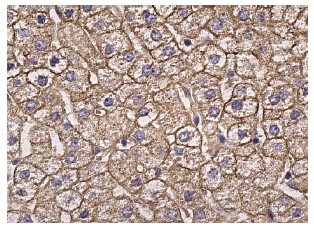
Immunoper-oxidase staining of formalin fixed, paraffin-embedded human liver tissue showing membrane and cytoplasmic staining of hepatocytes.| Product Name | ferritin heavy chain Antibody (H-53) AC |
|---|---|
| Antibody Type | Primary Antibodies |
| Antigen Alias | epitope corresponding to amino acids 131-183 of ferritin heavy chain of human origin |
| Modification Notes | Mammalian ferritins consist of 24 subunits made up of two types of poly-peptide chains, ferritin heavy chain and ferritin light chain, which each have unique functions. Ferritin heavy chains catalyze the first step in iron storage, the oxidation of FeII, whereas ferritin light chains promote the nucleation of ferrihydrite, enabling storage of FeIII. The most prominent role of mamma-lian ferritins is to provide iron-buffering capacity to cells. In addition to iron buffering, heavy chain ferritin is also involved in the regulation of thymidine biosynthesis via increased expression of cytoplasmic serine hydroxymethyltransferase, which is a limiting factor in thymidylate synthesis in MCF-7 cells. Light chain ferritin is involved in cataracts by at least two mechanisms: hereditary hyperferritinemia cataract syndrome, in which light chain ferritin is overexpressed; and oxidative stress, an important factor in the development of aging-related cataracts. |
| Clonality | Polyclonal |
|---|---|
| Isotype | IgG |
| Host Species | Rabbit |
| Tested Applications | WBIPIFIHCELISA |
| recommended for detection of ferritin heavy chain of mouse, rat and human origin by WB, IP, IF, IHC(P) and ELISA also reactive with additional species, including canine: |
|
| Species Reactivity | HumanMouseRat |
| Concentration | 1mg/ml |
| Purification | Affinity purified |
| Alternative Names | epitope corresponding to amino acids 131-183 of ferritin heavy chain of human origin |
|---|---|
| Tissue Specificity | epitope corresponding to amino acids 131-183 of ferritin heavy chain of human origin |
| Entrez Gene | 2495 |
|---|
Application
Immunoper-oxidase staining of formalin fixed, paraffin-embedded human liver tissue showing membrane and cytoplasmic staining of hepatocytes.| Application Notes | recommended for detection of ferritin heavy chain of mouse, rat and human origin by WB, IP, IF, IHC(P) and ELISA also reactive with additional species, including canine: |
|---|
| Form | Liquid |
|---|---|
| Storage Instructions | For short-term storage, store at 4° C. For long-term storage, aliquot and store at -20ºC or below. Avoid multiple freeze-thaw cycles. |
| Storage Buffer | phosphate buffered saline , pH 7.4, 150mM NaCl, 0.02% sodium azide and 50% glycerol. |


