Application
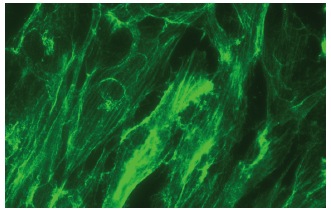
Immunofluorescence staining of methanol-fixed NIH/3T3 cells showing membrane localization.| Product Name | calsyntenin-1 Antibody (N-12) |
|---|---|
| Antibody Type | Primary Antibodies |
| Antigen Alias | epitope mapping within an N-terminal extracellular domain of calsyntenin-1 of human origin |
| Modification Notes | Members of the calsyntenin protein family are localized to the post-synaptic membrane of exicitatory central nervous system (CNS) synapses. Calsyntenin-1, also known as CSTN1, PIK3CD, Alzheimer-related cadherin-like protein, non-classical cadherin XB31alpha, KIAA0911, ALC-ALPHA, alcalpha1, alcalpha2 or FLJ32258, is a 981 amino acid single-pass type I membrane protein that localizes to the membrane of endoplasmic reticulum, Golgi apparatus, cell projections and postsynaptic cells. Expressed in brain, calsyntenin-1 is also found at lower levels in placenta, skeletal muscle, heart and kidney. Calsyntenin-1 binds synaptic Ca2+ with its cytoplasmic domain and plays a role in extracellular proteolysis. Calsyntenin-1 is also known to form a complex with X11∫ and APP to suppress the metabolic cleavage of APP, and docks vesicular cargo to KLC1. Calsyntenin-1 may be related to the development or progression of Alzheimer’s disease, and two calsyntenin-1 isoforms are produced as a result of alternative splicing events. |
| Clonality | Polyclonal |
|---|---|
| Isotype | IgG |
| Host Species | Rabbit |
| Tested Applications | WBIFELISA |
| recommended for detection of calsyntenin-1 isoforms 1 and 2 of mouse, rat and human origin by WB, IF and ELISA non cross-reactive with calsyntenin-2 or calsyntenin-3: |
|
| Species Reactivity | HumanMouseRat |
| Concentration | 1mg/ml |
| Purification | Affinity purified |
| Alternative Names | epitope mapping within an N-terminal extracellular domain of calsyntenin-1 of human origin |
|---|---|
| Tissue Specificity | epitope mapping within an N-terminal extracellular domain of calsyntenin-1 of human origin |
| Entrez Gene | 22883 |
|---|
Application
Immunofluorescence staining of methanol-fixed NIH/3T3 cells showing membrane localization.| Application Notes | recommended for detection of calsyntenin-1 isoforms 1 and 2 of mouse, rat and human origin by WB, IF and ELISA non cross-reactive with calsyntenin-2 or calsyntenin-3: |
|---|
| Form | Liquid |
|---|---|
| Storage Instructions | For short-term storage, store at 4° C. For long-term storage, aliquot and store at -20ºC or below. Avoid multiple freeze-thaw cycles. |
| Storage Buffer | phosphate buffered saline , pH 7.4, 150mM NaCl, 0.02% sodium azide and 50% glycerol. |


