Application
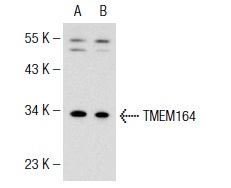
Western blot analysis of TMEM164 expression in HeLa (A) and Jurkat (B) whole cell lysates.| Product Name | TMEM164 Antibody (C-14) |
|---|---|
| Antibody Type | Primary Antibodies |
| Antigen Alias | epitope mapping near the C-terminus of TMEM164 of human origin |
| Modification Notes | TMEM164 (transmembrane protein 164) is a 297 amino acid protein encoded by a gene mapping to the human X and Y chromosomes. The X and Y chromosomes are the human sex chromosomes. Chromosome X consists of about 153 million base pairs and nearly 1,000 genes. The combination of an X and Y chromosome lead to normal male development while two copies of X lead to normal female development. There are a number of conditions related to an unsual number and combination of sex chromosomes being inherited. More than one copy of the X chromosome with a Y chromosome causes Klinefelter's syndrome. A single copy of X alone leads to Turner's syndrome. More than 2 copies of the X chromosome, in the absence of a Y chromosome, is known as Triple X syndrome. Color blindness, hemophilia, and Duchenne muscular dystrophy are well known X chromosome-linked conditions which affect males more frequently as males carry a single X chromosome. |
| Clonality | Polyclonal |
|---|---|
| Isotype | IgG |
| Host Species | Rabbit |
| Tested Applications | WBIPIFELISA |
| recommended for detection of TMEM164 of mouse, rat and human origin by WB, IP, IF and ELISA non cross-reactive with other TMEM family members also reactive with additional species, including equine, canine, bovine, porcine and avian: |
|
| Species Reactivity | HumanMouseRat |
| Concentration | 1mg/ml |
| Purification | Affinity purified |
| Alternative Names | epitope mapping near the C-terminus of TMEM164 of human origin |
|---|---|
| Tissue Specificity | epitope mapping near the C-terminus of TMEM164 of human origin |
| Entrez Gene | 84187 |
|---|
Application
Western blot analysis of TMEM164 expression in HeLa (A) and Jurkat (B) whole cell lysates.| Application Notes | recommended for detection of TMEM164 of mouse, rat and human origin by WB, IP, IF and ELISA non cross-reactive with other TMEM family members also reactive with additional species, including equine, canine, bovine, porcine and avian: |
|---|
| Form | Liquid |
|---|---|
| Storage Instructions | For short-term storage, store at 4° C. For long-term storage, aliquot and store at -20ºC or below. Avoid multiple freeze-thaw cycles. |
| Storage Buffer | phosphate buffered saline , pH 7.4, 150mM NaCl, 0.02% sodium azide and 50% glycerol. |


