Application
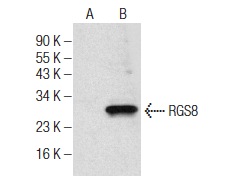
Western blot analysis of RGS8 expression in non-transfected: (A) and human RGS8 transfected: (B) 293T whole cell lysates.| Product Name | RGS8 Antibody (H-65) |
|---|---|
| Antibody Type | Primary Antibodies |
| Antigen Alias | epitope corresponding to amino acids 1-65 mapping at the N-terminus of RGS8 of human origin |
| Modification Notes | The regulators of G protein signaling (RGS) proteins inhibit heterotrimeric G protein signaling. RGS proteins work by functioning as GTPase-activating proteins (which increase the GTPase activity of G protein alpha-subunits) thereby driving G proteins into their inactive GDP-bound form. RGS8 is a 180 amino acid RGS protein that is expressed mainly in the brain, specifically in the Purkinje cells of the cerebellum. RGS8 differs from most other RGS members in that RGS8 has a positive effect on G-protein-coupled inwardly rectifying K+ (GIRK1/2) channels, whereas other RGS proteins function as simple negative regulators. Because both positive and negative effects have been observed with the RGS8 protein, RGS8 expression most likely improves upon the kinetic efficacy of G-proteins. The NH(2) terminus of RGS8 is responsible for its subcellular localization. |
| Clonality | Polyclonal |
|---|---|
| Isotype | IgG |
| Host Species | Rabbit |
| Tested Applications | WBIPIFELISA |
| recommended for detection of RGS8 of mouse, rat and human origin by WB, IP, IF and ELISA also reactive with additional species, including equine, canine and porcine: |
|
| Species Reactivity | HumanMouseRat |
| Concentration | 1mg/ml |
| Purification | Affinity purified |
| Alternative Names | epitope corresponding to amino acids 1-65 mapping at the N-terminus of RGS8 of human origin |
|---|---|
| Tissue Specificity | epitope corresponding to amino acids 1-65 mapping at the N-terminus of RGS8 of human origin |
Application
Western blot analysis of RGS8 expression in non-transfected: (A) and human RGS8 transfected: (B) 293T whole cell lysates.| Application Notes | recommended for detection of RGS8 of mouse, rat and human origin by WB, IP, IF and ELISA also reactive with additional species, including equine, canine and porcine: |
|---|
| Form | Liquid |
|---|---|
| Storage Instructions | For short-term storage, store at 4° C. For long-term storage, aliquot and store at -20ºC or below. Avoid multiple freeze-thaw cycles. |
| Storage Buffer | phosphate buffered saline , pH 7.4, 150mM NaCl, 0.02% sodium azide and 50% glycerol. |


