WB
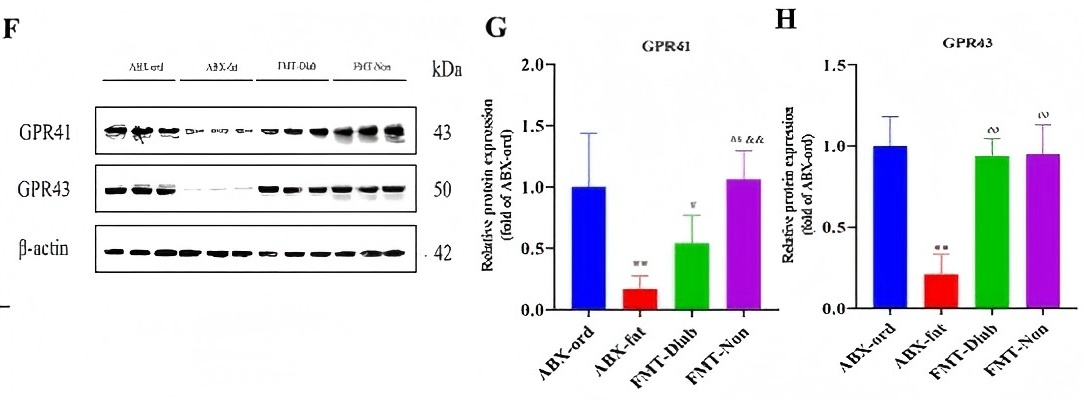
F–H GPR41 and GPR43 protein expression.| Product Name | GPR41 Antibody (H-100) |
|---|---|
| Antibody Type | Primary Antibodies |
| Conjugation | Agarose |
| Modification | Acetylated |
| Modification Notes | G protein-coupled receptors (GPRs), also known as seven transmembrane receptors, heptahelical receptors or 7TM receptors, comprise a superfamily of proteins that play a role in many different stimulus-response pathways. GPRs translate extracellular signals into intracellular signals (a process called G-protein activation) and they respond to a variety of signaling molecules, such as hormones and neurotransmitters. GPR41 (G-protein coupled receptor 41), also known as FFAR3 (Free fatty acid receptor 3), is a 346 amino acid multi-pass membrane protein that belongs to the G protein-coupled receptor family. Expressed at high levels in adipose tissue and at lower levels throughout the body, GPR41 functions as a receptor for short chain fatty acids via elevation of intracellular calcium levels and inhibition of adenylyl cyclase. |
| Clonality | Polyclonal |
|---|---|
| Isotype | IgG |
| Host Species | Rabbit |
| Tested Applications | ELISAIFIPWB |
| recommended for detection of GPR41 of mouse, rat and human origin by WB, IP, IF and ELISA also reactive with additional species, including equine: |
|
| Species Reactivity | HumanMouseRat |
| Concentration | 1mg/ml |
| Purification | Affinity purified |
| Alternative Names | epitope corresponding to amino acids 106-180 mapping within an internal region of GPR41 of human origin |
|---|---|
| Tissue Specificity | epitope corresponding to amino acids 106-180 mapping within an internal region of GPR41 of human origin |
| Entrez Gene | 2865 |
|---|
WB
F–H GPR41 and GPR43 protein expression.| Application Notes | recommended for detection of GPR41 of mouse, rat and human origin by WB, IP, IF and ELISA also reactive with additional species, including equine: |
|---|
| Form | Liquid |
|---|---|
| Storage Instructions | For short-term storage, store at 4° C. For long-term storage, aliquot and store at -20ºC or below. Avoid multiple freeze-thaw cycles. |
| Storage Buffer | phosphate buffered saline , pH 7.4, 150mM NaCl, 0.02% sodium azide and 50% glycerol. |


