Application
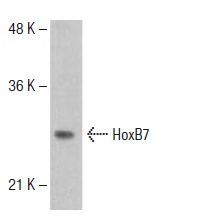
Western blot analysis of human HoxB7 transfected 293T whole cell lysate.| Product Name | HoxB7 Antibody (Z-25) |
|---|---|
| Antibody Type | Primary Antibodies |
| Antigen Alias | recommended for detection of HoxB7 of mouse, rat, human, Drosophila and zebrafish origin by WB, IP and ELISA; also reactive with additional species, including canine |
| Modification Notes | The Hox proteins play a role in development and cellular differentiation by regulating downstream target genes. Specifically, the Hox proteins direct DNA-protein and protein-protein interactions that assist in determining the morphologic features associated with the anterior-posterior body axis. The mammalian HOX gene complex consists of 39 genes that are located on four linkage groups, which are dispersed over four chromosomes. A segment of the HoxB7 proximal promoter drives renal expression of reporter genes specifically in the ureteric bud and collecting ducts. Expression levels of HoxB7 are lower in lymph node metastasis-positive cancer tissues than negative cancer tissues. These results suggest that aberrant expression of HOX genes is related to the development of breast cancer and malignant behavior of cancer cells. |
| Clonality | Polyclonal |
|---|---|
| Isotype | IgG |
| Host Species | Rabbit |
| Tested Applications | WBIPELISA |
| WB:1:500~1:2000 IP:1:100~1:500 Notes:Optimal dilutions/concentrations should be determined by the researcher. |
|
| Species Reactivity | HumanMouseRat |
| Concentration | 1mg/ml |
| Purification | Affinity purified |
| Alternative Names | recommended for detection of HoxB7 of mouse rat human Drosophila and zebrafish origin by WB IP and ELISA also reactive with additional species including canine |
|---|---|
| Tissue Specificity | recommended for detection of HoxB7 of mouse, rat, human, Drosophila and zebrafish origin by WB, IP and ELISA; also reactive with additional species, including canine |
| Entrez Gene | 3217 |
|---|
Application
Western blot analysis of human HoxB7 transfected 293T whole cell lysate.| Application Notes | WB:1:500~1:2000 IP:1:100~1:500 Notes:Optimal dilutions/concentrations should be determined by the researcher. |
|---|
| Form | Liquid |
|---|---|
| Storage Instructions | For short-term storage, store at 4° C. For long-term storage, aliquot and store at -20ºC or below. Avoid multiple freeze-thaw cycles. |
| Storage Buffer | phosphate buffered saline , pH 7.4, 150mM NaCl, 0.02% sodium azide and 50% glycerol. |


