Application
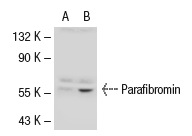
Western blot analysis of COMMD1 expression in mouse liver tissue extract.| Product Name | COMMD1 Antibody (H-140) |
|---|---|
| Antibody Type | Primary Antibodies |
| Antigen Alias | epitope corresponding to amino acids 41-180 mapping near the C-terminus of COMMD1 of human origin |
| Modification Notes | Copper is an essential micronutrient used as a co-factor for several essential enzymes in all living organisms. Due to the high toxicity of copper, its metabolism is tightly regulated and defects in this regulation can cause Menkes (deficiency) or Wilson (accumulation) disease in various tissue. COMMD1 (copper metabolism MURR1 domain-containing protein 1), also known as MURR1, is a 190 amino acid protein responsible for inhibition of TNF-induced NF˚B p50 and has a suggested role in facilitation of biliary copper excretion within hepatocytes. COMMD1 localizes to both the nucleus and cytoplasm within the cell. Highest expression is found in liver tissue, with lower expressions in lung, heart, kidney and brain tissue. COMMD1 interacts directly with COMMD6 and ATP7B, and indirectly with I˚B-∫ and COMMD7. All ten members of the COMMD family (COMMD1-10) contain a conserved COMM domain which provides an interface for protein-protein interactions. |
| Clonality | Polyclonal |
|---|---|
| Isotype | IgG |
| Host Species | Rabbit |
| Tested Applications | WBIPIFELISA |
| recommended for detection of COMMD1 of mouse and human origin by WB, IP, IF and ELISA also reactive with additional species, including equine, canine, bovine and porcine: |
|
| Species Reactivity | HumanMouseRat |
| Concentration | 1mg/ml |
| Purification | Affinity purified |
| Alternative Names | epitope corresponding to amino acids 41-180 mapping near the C-terminus of COMMD1 of human origin |
|---|---|
| Tissue Specificity | epitope corresponding to amino acids 41-180 mapping near the C-terminus of COMMD1 of human origin |
| Entrez Gene | 150684 |
|---|
Application
Western blot analysis of COMMD1 expression in mouse liver tissue extract.| Application Notes | recommended for detection of COMMD1 of mouse and human origin by WB, IP, IF and ELISA also reactive with additional species, including equine, canine, bovine and porcine: |
|---|
| Form | Liquid |
|---|---|
| Storage Instructions | For short-term storage, store at 4° C. For long-term storage, aliquot and store at -20ºC or below. Avoid multiple freeze-thaw cycles. |
| Storage Buffer | phosphate buffered saline , pH 7.4, 150mM NaCl, 0.02% sodium azide and 50% glycerol. |


