Application
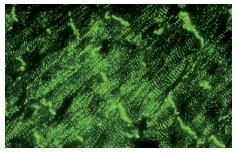
Immunofluorescence staining of normal mouse heart frozen section showing membrane staining.Application
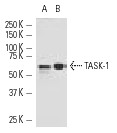
Western blot analysis of TASK-1 expression in MIA PaCa-2 whole cell lysate (A) and rat placenta tissue extract (B).| Product Name | TASK-1 Antibody (H-50) |
|---|---|
| Antibody Type | Primary Antibodies |
| Antigen Alias | epitope corresponding to amino acids 295-344 mapping within a C-terminal cytoplasmic domain of TASK-1 of human origin |
| Modification Notes | K+ channels are divided into three subclasses reflecting the number of transmembrane segments (TMS), which are designated 6TMS, 4TMS and 2TMS. Members of the 4TMS class contain two distinct pore regions and include TWIK, TREK, TRAAK and TASK. TASK channels are highly sensitive to external pH in the physiological range. TASK-1 is expressed in brain and in rat heart, with high levels of expression in the right atrium. TASK-2, mainly expressed in kidney, is localized in cortical distal tubules and collecting ducts, suggesting a role in renal K+ transport. TASK-3 from rat cerebellum shares 54% identity with TASK-1, but less than 30% identity with TASK-2 and other tandem pore K+ channels. |
| Clonality | Polyclonal |
|---|---|
| Isotype | IgG |
| Host Species | Rabbit |
| Tested Applications | WBIPIFELISA |
| recommended for detection of TASK-1 of mouse, rat and human origin by WB, IP, IF and ELISA also reactive with additional species, including canine, bovine and avian: |
|
| Species Reactivity | HumanMouseRat |
| Concentration | 1mg/ml |
| Purification | Affinity purified |
| Alternative Names | epitope corresponding to amino acids 295-344 mapping within a C-terminal cytoplasmic domain of TASK-1 of human origin |
|---|---|
| Tissue Specificity | epitope corresponding to amino acids 295-344 mapping within a C-terminal cytoplasmic domain of TASK-1 of human origin |
| Entrez Gene | 3777 |
|---|
Application
Immunofluorescence staining of normal mouse heart frozen section showing membrane staining.
Application
Western blot analysis of TASK-1 expression in MIA PaCa-2 whole cell lysate (A) and rat placenta tissue extract (B).| Application Notes | recommended for detection of TASK-1 of mouse, rat and human origin by WB, IP, IF and ELISA also reactive with additional species, including canine, bovine and avian: |
|---|
| Form | Liquid |
|---|---|
| Storage Instructions | For short-term storage, store at 4° C. For long-term storage, aliquot and store at -20ºC or below. Avoid multiple freeze-thaw cycles. |
| Storage Buffer | phosphate buffered saline , pH 7.4, 150mM NaCl, 0.02% sodium azide and 50% glycerol. |


