Application
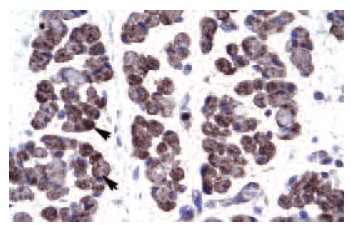
Immunoperoxidase staining of formalin-fixed, paraffin-embedded human muscle tissue showing cytoplasmic localization.| Product Name | TBX20 Antibody (U-21) |
|---|---|
| Antibody Type | Primary Antibodies |
| Antigen Alias | recommended for detection of TBX20 of mouse, rat, human and zebrafish origin by WB, IP, IF, IHC(P) and ELISA; also reactive with additional species, including canine |
| Modification Notes | Members of the T-box (Tbx) gene family share a conserved domain that codes for the T-box, a sequence involved in DNA-binding and protein dimerization. The Tbx gene family is largely conserved throughout metazoan evolution, and is implicated in a variety of developmental processes ranging from the formation of germ layers to the organizational patterning of the central nervous system. The T-box family member human TBX20 shares approximately 71% sequence identity with the T-box domain of the Drosophila H15 protein. The human TBX20 gene contains 6 exons spanning 22 kb of genomic DNA and encodes a deduced 297-amino acid protein, which is expressed in the fetal heart, eye and limb. During embryogenesis in the mouse, TBX20 is expressed in the developing heart, eye, ventral neural tube, and limbs, indicating a possible role in regulating development of these tissues. |
| Clonality | Polyclonal |
|---|---|
| Isotype | IgG |
| Host Species | Rabbit |
| Tested Applications | WBIPIFIHCELISA |
| WB:1:500~1:2000 IP:1:100~1:500 IF:1:200~1:500 IHC:1:50~1:200 Notes:Optimal dilutions/concentrations should be determined by the researcher. |
|
| Species Reactivity | HumanMouseRat |
| Concentration | 1mg/ml |
| Purification | Affinity purified |
| Alternative Names | recommended for detection of TBX20 of mouse rat human and zebrafish origin by WB IP IF IHC(P) and ELISA also reactive with additional species including canine |
|---|---|
| Tissue Specificity | recommended for detection of TBX20 of mouse, rat, human and zebrafish origin by WB, IP, IF, IHC(P) and ELISA; also reactive with additional species, including canine |
| Entrez Gene | 57057 |
|---|
Application
Immunoperoxidase staining of formalin-fixed, paraffin-embedded human muscle tissue showing cytoplasmic localization.| Application Notes | WB:1:500~1:2000 IP:1:100~1:500 IF:1:200~1:500 IHC:1:50~1:200 Notes:Optimal dilutions/concentrations should be determined by the researcher. |
|---|
| Form | Liquid |
|---|---|
| Storage Instructions | For short-term storage, store at 4° C. For long-term storage, aliquot and store at -20ºC or below. Avoid multiple freeze-thaw cycles. |
| Storage Buffer | phosphate buffered saline , pH 7.4, 150mM NaCl, 0.02% sodium azide and 50% glycerol. |


