Application
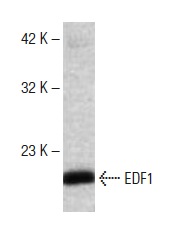
Western blot analysis of EDF1 expression in Jurkat whole cell lysate.| Product Name | EDF1 Antibody (U-21) |
|---|---|
| Antibody Type | Primary Antibodies |
| Antigen Alias | recommended for detection of EDF1 of mouse, rat and human origin by WB, IP and ELISA; also reactive with additional species, including canine |
| Modification Notes | Angiogenesis is the process of neovascularization and formation of new blood vessels from the established micro-circulation. Endothelial cell differentiation is required for angiogenesis. EDF1 (Endothelial differentiation-related factor 1), also known as MBF1 (Multiprotein-bridging factor 1) is a 148 amino acid transcriptional coactivator that modulates transcription of genes involved in endothelial differentiation. When endothelial cells are induced to differentiate in vitro, EDF1 is downregulated, leading to inhibition of cell growth and cell polarization. EDF1 binds calmodulin thorough its IQ domain and regulates nitric oxide synthase activity through calmodulin sequestration in the cytoplasm. Though ubiquitously expressed, EDF1 is most abundant in adult liver, heart, adipose tissues, intestine and pancreas. In fetal tissues, EDF1 is most abundant in kidney. There are two isoforms of EDF1 that are produced as a result of alternative splicing events. |
| Clonality | Polyclonal |
|---|---|
| Isotype | IgG |
| Host Species | Rabbit |
| Tested Applications | WBIPELISA |
| WB:1:500~1:2000 IP:1:100~1:500 Notes:Optimal dilutions/concentrations should be determined by the researcher. |
|
| Species Reactivity | HumanMouseRat |
| Concentration | 1mg/ml |
| Purification | Affinity purified |
| Alternative Names | recommended for detection of EDF1 of mouse rat and human origin by WB IP and ELISA also reactive with additional species including canine |
|---|---|
| Tissue Specificity | recommended for detection of EDF1 of mouse, rat and human origin by WB, IP and ELISA; also reactive with additional species, including canine |
| Entrez Gene | 8721 |
|---|
Application
Western blot analysis of EDF1 expression in Jurkat whole cell lysate.| Application Notes | WB:1:500~1:2000 IP:1:100~1:500 Notes:Optimal dilutions/concentrations should be determined by the researcher. |
|---|
| Form | Liquid |
|---|---|
| Storage Instructions | For short-term storage, store at 4° C. For long-term storage, aliquot and store at -20ºC or below. Avoid multiple freeze-thaw cycles. |
| Storage Buffer | phosphate buffered saline , pH 7.4, 150mM NaCl, 0.02% sodium azide and 50% glycerol. |


