Application
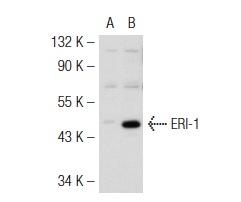
Western blot analysis of IL-5Rα 75 kDa and 105 kDa isoform expression in NAMALWA whole cell lysate.| Product Name | IL-5Rα Antibody (C-20) |
|---|---|
| Antibody Type | Primary Antibodies |
| Antigen Alias | epitope mapping near the C-terminus of IL-5Rα of human origin |
| Modification Notes | Interleukin 5 (IL-5) is a soluble T cell-derived factor, also known as T cell-replacing factor (TRF), that induces B cell and eosinophil growth and differentiation. IL-5 exerts its biological activity through the IL-5 receptor (IL-5R), which is composed of two chains: an å chain that binds IL-5 with low affinity and a ∫ chain that does not bind IL-5, but together with the IL-5 å chain, constitutes the high affinity IL-5 receptor. The cytoplasmic domain of both the å and ∫ chains is essential for signal transduction. Specifically, the membrane-proximal proline-rich sequence of the cytoplasmic domain of the IL-5R receptor å subunit, IL-5Rå, is critical for the IL-5 induced proliferative response, expression of nuclear proto-oncogenes and tyrosine phosphorylation of cellular proteins, such as JAK1 and JAK2. Alternative splicing of the IL-5Rå gene produces several isoforms, including a membrane-anchored isoform and a soluble isoform. The soluble isoform competes with IL-5 for binding to IL-5R and inhibits IL-5-mediated receptor activation and inflammatory mediator production, and, therefore, may be useful in treating asthma. |
| Clonality | Polyclonal |
|---|---|
| Isotype | IgG |
| Host Species | Rabbit |
| Tested Applications | WBIPIFELISA |
| recommended for detection of IL-5Rα of human origin by WB, IP, IF and ELISA: |
|
| Species Reactivity | HumanMouseRat |
| Concentration | 1mg/ml |
| Purification | Affinity purified |
| Alternative Names | epitope mapping near the C-terminus of IL-5R&alpha of human origin |
|---|---|
| Tissue Specificity | epitope mapping near the C-terminus of IL-5Rα of human origin |
| Entrez Gene | 3568 |
|---|
Application
Western blot analysis of IL-5Rα 75 kDa and 105 kDa isoform expression in NAMALWA whole cell lysate.| Application Notes | recommended for detection of IL-5Rα of human origin by WB, IP, IF and ELISA: |
|---|
| Form | Liquid |
|---|---|
| Storage Instructions | For short-term storage, store at 4° C. For long-term storage, aliquot and store at -20ºC or below. Avoid multiple freeze-thaw cycles. |
| Storage Buffer | phosphate buffered saline , pH 7.4, 150mM NaCl, 0.02% sodium azide and 50% glycerol. |


