Application
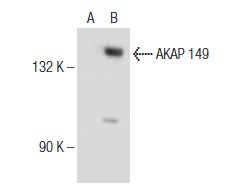
Western blot analysis of ENC1 expression in rat hippocampus tissue extract.| Product Name | ENC1 Antibody (H-42) |
|---|---|
| Antibody Type | Primary Antibodies |
| Antigen Alias | epitope corresponding to amino acids 238-279 mapping within an internal region of ENC1 of human origin |
| Modification Notes | Proteolytic degradation by the ubiquitin (Ub) system is essential for normal cell cycle progression, cellular differentiation and stress responses. The E3 ubiquitin-protein ligase complex uses a substrate-specific adapter, ENC1 (Ectoderm-neural cortex protein 1), to mediate ubiquitination. ENC1, also known as NRPB or PIG10, is a 589 amino acid Actin-binding protein that is involved in differentiation of neural crest cells and regulation of neuronal process formation. ENC1 is localized to the nuclear matrix and is highly expressed in adult brain and spinal cord tissues. Expression of ENC1 is up-regulated during neuronal differentiation. ENC1 may be regulated by the ∫-catenin/TCF pathway and is thought to play a role in histogenesis. ENC1 interacts with hypophosphorylated Rb (Retinoblastoma-associated protein) to form a complex that contains CUL-3, Rbx1 and ENC1 which is essential for neuronal cell differentiation. ENC1 contains one BTB (POZ) domain and six Kelch repeats. The BTB domain is thought to be necessary for the protein-protein interactions involved in cytoskeletal organization and the Kelch repeats denote a conserved tertiary structure. ENC1 is highly expressed in brain tumors, suggesting a possible role in carcinogenesis. |
| Clonality | Polyclonal |
|---|---|
| Isotype | IgG |
| Host Species | Rabbit |
| Tested Applications | WBIPIFELISA |
| recommended for detection of ENC1 of mouse, rat and human origin by WB, IP, IF and ELISA also reactive with additional species, including equine, canine, bovine, porcine and avian: |
|
| Species Reactivity | HumanMouseRat |
| Concentration | 1mg/ml |
| Purification | Affinity purified |
| Alternative Names | epitope corresponding to amino acids 238-279 mapping within an internal region of ENC1 of human origin |
|---|---|
| Tissue Specificity | epitope corresponding to amino acids 238-279 mapping within an internal region of ENC1 of human origin |
| Entrez Gene | 8507 |
|---|
Application
Western blot analysis of ENC1 expression in rat hippocampus tissue extract.| Application Notes | recommended for detection of ENC1 of mouse, rat and human origin by WB, IP, IF and ELISA also reactive with additional species, including equine, canine, bovine, porcine and avian: |
|---|
| Form | Liquid |
|---|---|
| Storage Instructions | For short-term storage, store at 4° C. For long-term storage, aliquot and store at -20ºC or below. Avoid multiple freeze-thaw cycles. |
| Storage Buffer | phosphate buffered saline , pH 7.4, 150mM NaCl, 0.02% sodium azide and 50% glycerol. |


