Application
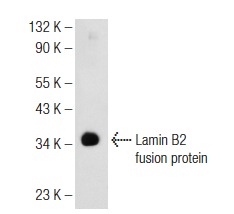
Western blot analysis of human recombinant Factor H fusion protein.| Product Name | Factor H Antibody (H-300) |
|---|---|
| Antibody Type | Primary Antibodies |
| Antigen Alias | epitope corresponding to amino acids 61-360 mapping within an internal region of Factor H of human origin |
| Modification Notes | The Factor H gene family is a multidomain, multifunctional protein family whose individual members are defined by conserved structural elements, which display diverse yet often overlapping functions. These proteins share a common structural motif, the short consensus repeat (SCR), which is structurally conserved among related genes and between phylogenetically divergent species. The human complement Factor H (FH, CFH, HUS, b-1H) gene encodes a 1213 amino acid serum glycoprotein which is arranged into 20 SCRs, each approximately 60 amino acids long, and an 18-residue leader sequence. Factor H controls the function of the alternative complement pathway and acts as a cofactor with Factor I (C3b inactivator). In addition, Factor H has functional activity outside of the complement system, where it can bind to the cellular integrin receptor (CD11b/CD18), interact with cell surface glycosaminoglycans and associate with the surface of certain pathogenic microorganisms. Deficiencies in Factor H is a common characteristic of acute renal disease. |
| Clonality | Polyclonal |
|---|---|
| Isotype | IgG |
| Host Species | Rabbit |
| Tested Applications | WBIPIFELISA |
| recommended for detection of Factor H of h, r and, to a lesser extent, mouse origin by WB, IP, IF and ELISA: |
|
| Species Reactivity | HumanMouseRat |
| Concentration | 1mg/ml |
| Purification | Affinity purified |
| Alternative Names | epitope corresponding to amino acids 61-360 mapping within an internal region of Factor H of human origin |
|---|---|
| Tissue Specificity | epitope corresponding to amino acids 61-360 mapping within an internal region of Factor H of human origin |
| Entrez Gene | 3075 |
|---|
Application
Western blot analysis of human recombinant Factor H fusion protein.| Application Notes | recommended for detection of Factor H of h, r and, to a lesser extent, mouse origin by WB, IP, IF and ELISA: |
|---|
| Form | Liquid |
|---|---|
| Storage Instructions | For short-term storage, store at 4° C. For long-term storage, aliquot and store at -20ºC or below. Avoid multiple freeze-thaw cycles. |
| Storage Buffer | phosphate buffered saline , pH 7.4, 150mM NaCl, 0.02% sodium azide and 50% glycerol. |


