Application
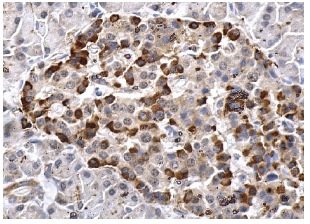
Immunoperoxidase staining of formalin fixed, paraffin-embedded human pancreas tissue showing cytoplasmic staining of Islets of Langerhans.| Product Name | LRP4 Antibody (H-98) |
|---|---|
| Antibody Type | Primary Antibodies |
| Antigen Alias | epitope corresponding to amino acids 1671-1768 mapping within an extracellular domain of LRP4 of human origin |
| Modification Notes | Members of the LDL receptor gene family, including LDLR (low density lipoprotein receptor), LRP1 (low density lipoprotein related protein), Megalin (also designated GP330), VLDLR (very low density lipoprotein receptor) and ApoER2 are characterized by a cluster of cysteine-rich class A repeats, epidermal growth factor (EGF)-like repeats, YWTD repeats and an O-linked sugar domain. LRP4 (low-density lipoprotein receptor-related protein 4), also known as multiple epidermal growth factor-like domains 7 (MEGF7), is a 1950 amino acid protein belonging to the LDL receptor gene family. LRP4 is potentially a cell surface endocytic receptor, which binds extracellular ligands and internalizes them for degradation by lysosomes. As a single-pass type I membrane protein, LRP4 is expressed in many regions of the brain. Mutations in the gene that encodes LRP4 have been found to cause syndactyly, a condition characterized by the fusion of two or more digits. |
| Clonality | Polyclonal |
|---|---|
| Isotype | IgG |
| Host Species | Rabbit |
| Tested Applications | WBIPIFIHCELISA |
| recommended for detection of LRP4 of mouse, rat and human origin by WB, IP, IF, IHC(P) and ELISA also reactive with additional species, including canine and bovine: |
|
| Species Reactivity | HumanMouseRat |
| Concentration | 1mg/ml |
| Purification | Affinity purified |
| Alternative Names | epitope corresponding to amino acids 1671-1768 mapping within an extracellular domain of LRP4 of human origin |
|---|---|
| Tissue Specificity | epitope corresponding to amino acids 1671-1768 mapping within an extracellular domain of LRP4 of human origin |
| Entrez Gene | 4038 |
|---|
Application
Immunoperoxidase staining of formalin fixed, paraffin-embedded human pancreas tissue showing cytoplasmic staining of Islets of Langerhans.| Application Notes | recommended for detection of LRP4 of mouse, rat and human origin by WB, IP, IF, IHC(P) and ELISA also reactive with additional species, including canine and bovine: |
|---|
| Form | Liquid |
|---|---|
| Storage Instructions | For short-term storage, store at 4° C. For long-term storage, aliquot and store at -20ºC or below. Avoid multiple freeze-thaw cycles. |
| Storage Buffer | phosphate buffered saline , pH 7.4, 150mM NaCl, 0.02% sodium azide and 50% glycerol. |


