Application
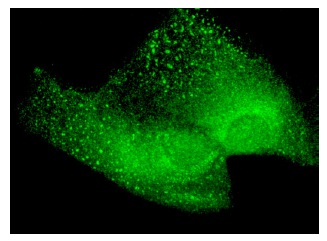
Immunofluorescence staining of formalin-fixed Hep G2 cells showing membrane and cytoplasmic localization.| Product Name | PMCA Antibody (H-300) |
|---|---|
| Antibody Type | Primary Antibodies |
| Modification Notes | Plasma membrane-type Ca2+-ATPases (PMCAs) mediate the export of bivalent calcium ions from eukaryotic cells. As members of the P class of ion-motive ATPases, PMCAs are a functionally diverse group of proteins that are derived from alternatively spliced transcripts originating from at least four distinct genes. The expression of different PMCA isoforms and splice variants is regulated in a developmental, tissue- and cell type-specific manner, and with respect to the physiological needs of specific cell and tissue types. Spatial and temporal rates of resting intracellular Ca2+ concentrations and Ca2+ signaling in eukaryotic cells are dependent on the array of PMCA isoforms that are expressed in concert with the rate of Ca2+ export. |
| Clonality | Polyclonal |
|---|---|
| Isotype | IgG |
| Host Species | Rabbit |
| Tested Applications | WBIPIFELISA |
| recommended for detection of PMCA1, 2, 3 and 4 of mouse, rat and human origin by WB, IP, IF and ELISA also reactive with additional species, including equine, canine, bovine, porcine and avian | |
| Species Reactivity | HumanMouseRat |
| Concentration | 1mg/ml |
| Purification | Affinity purified |
| Alternative Names | epitope corresponding to amino acids 481-780 mapping within a cytoplasmic domain of PMCA1 of human origin |
|---|---|
| Tissue Specificity | epitope corresponding to amino acids 481-780 mapping within a cytoplasmic domain of PMCA1 of human origin |
| Entrez Gene | 490 |
|---|
Application
Immunofluorescence staining of formalin-fixed Hep G2 cells showing membrane and cytoplasmic localization.| Application Notes | recommended for detection of PMCA1, 2, 3 and 4 of mouse, rat and human origin by WB, IP, IF and ELISA also reactive with additional species, including equine, canine, bovine, porcine and avian |
|---|
| Form | Liquid |
|---|---|
| Storage Instructions | For short-term storage, store at 4° C. For long-term storage, aliquot and store at -20ºC or below. Avoid multiple freeze-thaw cycles. |
| Storage Buffer | phosphate buffered saline , pH 7.4, 150mM NaCl, 0.02% sodium azide and 50% glycerol. |


