Application
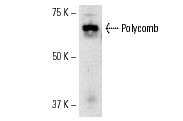
Western blot analysis of Polycomb expression in Schneider's Drosophila line 2 whole cell lysate.| Product Name | Polycomb Antibody (d-220) |
|---|---|
| Antibody Type | Primary Antibodies |
| Antigen Alias | epitope corresponding to amino acids 171-370 of Polycomb of Drosophila melanogaster origin |
| Modification Notes | Drosophila melanogaster is a proven and effective model for studying developmental and cellular processes common to higher eukaryotes. Approximately 13,600 genes have been elucidated from more than 120 megabases of euchromatin, and they are organized among the chromosomes 2, 3, 4, X and Y, with the Y chromosome being predominately heterochromatic (1). Drosophila genes can be categorized based on the type of protein they encode and are represented by six major classifications, which include intracellular signaling proteins, transmembrane proteins, RNA binding proteins, secreted factors, transcription regulators (basic helix-loop-helix, homeodomain containing, zinc finger containing, and chromatin associated) or other functional proteins (2). Among these proteins, Polycomb (Pc) is a transcription regulator that prevents the interaction of transcriptional components with cis-elements by associating with cis-polycomb response elements (PREs) and creating novel chromatin structures (3-7). |
| Clonality | Polyclonal |
|---|---|
| Isotype | IgG |
| Host Species | Rabbit |
| Tested Applications | WBIPIFELISA |
| recommended for detection of Polycomb of Drosophila origin by WB, IP, IF and ELISA: |
|
| Species Reactivity | HumanMouseRat |
| Concentration | 1mg/ml |
| Purification | Affinity purified |
| Alternative Names | epitope corresponding to amino acids 171-370 of Polycomb of Drosophila melanogaster origin |
|---|---|
| Tissue Specificity | epitope corresponding to amino acids 171-370 of Polycomb of Drosophila melanogaster origin |
Application
Western blot analysis of Polycomb expression in Schneider's Drosophila line 2 whole cell lysate.| Application Notes | recommended for detection of Polycomb of Drosophila origin by WB, IP, IF and ELISA: |
|---|
| Form | Liquid |
|---|---|
| Storage Instructions | For short-term storage, store at 4° C. For long-term storage, aliquot and store at -20ºC or below. Avoid multiple freeze-thaw cycles. |
| Storage Buffer | phosphate buffered saline , pH 7.4, 150mM NaCl, 0.02% sodium azide and 50% glycerol. |


