Application
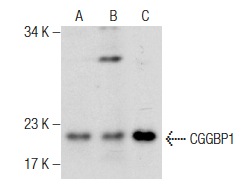
Western blot analysis of CGGBP1 expression in K-562 (A), MCF7 (B) and CCRF-CEM (C) nuclear extracts.Application
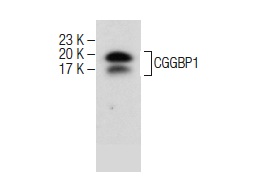
Western blot analysis of CGGBP1 expression in MDA-MB-435S whole cell lysate.| Product Name | CGGBP1 Antibody (FL-167) |
|---|---|
| Antibody Type | Primary Antibodies |
| Antigen Alias | epitope corresponding to amino acids 1-167 representing full length CGGBP1 of human origin |
| Modification Notes | Fragile X syndrome is the most frequent form of inherited mental retardation and is the result of transcriptional silencing of the FMR1 (fragile X mental retardation) gene on the X chromosome. The FMR1 gene contains a distinct CpG dinucleotide repeat located in the 5’-untranslated region of the gene which, in fragile X syndrome, is substantially amplified and subject to extensive methylation and enhanced transcriptional silencing. CGGBP1 (CGG triplet repeat binding protein 1), also known as CGGBP or p20-CGGBP, is a 167 amino acid nuclear protein that influences FMR1 expression. Highly expressed in thymus, placenta, lymph nodes, cerebral cortex and cerebellum, CGGBP1 binds to the 5’ (CGG)n-3’ repeat in the promotor of the FMR1 gene and positively regulates expression of the FMR1 protein. Binding of CGGBP1 to the FMR1 promoter is inhibited by cytosine-specific DNA methylation of the protein binding motif, suggesting that CGGBP1 activity is silenced in FMR1-affected individuals. |
| Clonality | Polyclonal |
|---|---|
| Isotype | IgG |
| Host Species | Rabbit |
| Tested Applications | WBIPIFELISA |
| recommended for detection of CGGBP1 of mouse, rat and human origin by WB, IP, IF and ELISA also reactive with additional species, including equine, canine, bovine and avian: |
|
| Species Reactivity | HumanMouseRat |
| Concentration | 1mg/ml |
| Purification | Affinity purified |
| Alternative Names | epitope corresponding to amino acids 1-167 representing full length CGGBP1 of human origin |
|---|---|
| Tissue Specificity | epitope corresponding to amino acids 1-167 representing full length CGGBP1 of human origin |
| Entrez Gene | 8545 |
|---|
Application
Western blot analysis of CGGBP1 expression in K-562 (A), MCF7 (B) and CCRF-CEM (C) nuclear extracts.
Application
Western blot analysis of CGGBP1 expression in MDA-MB-435S whole cell lysate.| Application Notes | recommended for detection of CGGBP1 of mouse, rat and human origin by WB, IP, IF and ELISA also reactive with additional species, including equine, canine, bovine and avian: |
|---|
| Form | Liquid |
|---|---|
| Storage Instructions | For short-term storage, store at 4° C. For long-term storage, aliquot and store at -20ºC or below. Avoid multiple freeze-thaw cycles. |
| Storage Buffer | phosphate buffered saline , pH 7.4, 150mM NaCl, 0.02% sodium azide and 50% glycerol. |


