Application
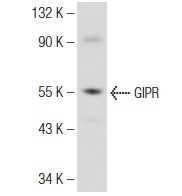
Western blot analysis of GIPR expression in rat pituitary tissue extract.| Product Name | GIPR Antibody (H-70) |
|---|---|
| Antibody Type | Primary Antibodies |
| Antigen Alias | epitope corresponding to amino acids 268-337 mapping within an internal region of GIPR of human origin |
| Modification Notes | GIPR (gastric inhibitory polypeptide receptor) is a 466 amino acid protein belonging to the G-protein coupled receptor 2 family. The activity of GIPR is mediated by G proteins, which activate adenylyl cyclase. Expressed as two isoforms produced by alternative splicing, GIPR is a multi-pass cell membrane protein that acts as a receptor for the glucose-dependent insulinotropic polypeptide (GIP). GIP is a major physiologic factor in the augmentation of the insulin response to oral glucose. GIP is a peptide hormone that is released postprandially from the small intestine and acts in concert with glucagon-like peptide (GLP)-1 to potentiate glucose-induced insulin secretion from the pancreatic beta-cell. GIP has been shown to increase adenylyl cyclase activity, elevate intracellular calcium levels, and stimulate a mitogen-activated protein kinase pathway in the pancreatic beta-cell. GIP release is demonstrated predominantly after ingestion of carbohydrate and fat and the effects of acid on GIP are consistent with a role for GIP as an enterogastrone. |
| Clonality | Polyclonal |
|---|---|
| Isotype | IgG |
| Host Species | Rabbit |
| Tested Applications | WBIPIFELISA |
| recommended for detection of GIPR of mouse, rat and human origin by WB, IP, IF and ELISA also reactive with additional species, including equine, canine, bovine and porcine: |
|
| Species Reactivity | HumanMouseRat |
| Concentration | 1mg/ml |
| Purification | Affinity purified |
| Alternative Names | epitope corresponding to amino acids 268-337 mapping within an internal region of GIPR of human origin |
|---|---|
| Tissue Specificity | epitope corresponding to amino acids 268-337 mapping within an internal region of GIPR of human origin |
| Entrez Gene | 2696 |
|---|
Application
Western blot analysis of GIPR expression in rat pituitary tissue extract.| Application Notes | recommended for detection of GIPR of mouse, rat and human origin by WB, IP, IF and ELISA also reactive with additional species, including equine, canine, bovine and porcine: |
|---|
| Form | Liquid |
|---|---|
| Storage Instructions | For short-term storage, store at 4° C. For long-term storage, aliquot and store at -20ºC or below. Avoid multiple freeze-thaw cycles. |
| Storage Buffer | phosphate buffered saline , pH 7.4, 150mM NaCl, 0.02% sodium azide and 50% glycerol. |


