Application
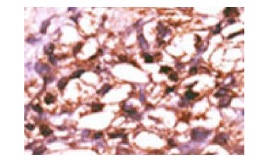
Immunoperoxidase staining of formalin fixed, paraffin-embedded human cancer tissue showing cytoplasmic staining.| Product Name | p-TNIK Antibody (Ser 764) |
|---|---|
| Antibody Type | Primary Antibodies |
| Antigen Alias | recommended for detection of Ser 764 phosphorylated TNIK of human origin by WB, IP, IF, IHC(P) and ELISA |
| Modification | Phosphoralated |
| Modification Notes | The phosphorylation and dephosphorylation of proteins on serine and threonine residues is an essential means of regulating a broad range of cellular functions in eukaryotes, including cell division, homeostasis and apoptosis. A group of proteins that are intimately involved in this process are the serine/threonine (Ser/Thr) protein kinases. TNIK (TRAF2 and NCK-interacting protein kinase) is a 1,360 amino acid protein that contains one protein kinase domain and belongs to a subfamily of Ser/Thr protein kinases. Expressed ubiquitously with highest expression in brain, heart and skeletal muscle, TNIK functions as a stress-activated Ser/Thr kinase that catalyzes the ATP-dependent phosphorylation of target proteins and is thought to play a role in the response to environmental stress. Additionally, via its catalytic activity, TNIK may participate in cytoskeletal regulation events throughout the cell. TNIK exists as 8 isoforms that are produced by alternative splicing events. Human TNIK may be phosphorylated on specific amino acid residues, including Ser 764. |
| Clonality | Polyclonal |
|---|---|
| Isotype | IgG |
| Host Species | Rabbit |
| Tested Applications | WBIPIFIHCELISA |
| WB:1:500~1:2000 IP:1:100~1:500 IF:1:200~1:500 IHC:1:50~1:200 Notes:Optimal dilutions/concentrations should be determined by the researcher. |
|
| Species Reactivity | HumanMouseRat |
| Concentration | 1mg/ml |
| Purification | Affinity purified |
| Alternative Names | recommended for detection of Ser 764 phosphorylated TNIK of human origin by WB IP IF IHC(P) and ELISA |
|---|---|
| Tissue Specificity | recommended for detection of Ser 764 phosphorylated TNIK of human origin by WB, IP, IF, IHC(P) and ELISA |
| Entrez Gene | 23043 |
|---|
Application
Immunoperoxidase staining of formalin fixed, paraffin-embedded human cancer tissue showing cytoplasmic staining.| Application Notes | WB:1:500~1:2000 IP:1:100~1:500 IF:1:200~1:500 IHC:1:50~1:200 Notes:Optimal dilutions/concentrations should be determined by the researcher. |
|---|
| Form | Liquid |
|---|---|
| Storage Instructions | For short-term storage, store at 4° C. For long-term storage, aliquot and store at -20ºC or below. Avoid multiple freeze-thaw cycles. |
| Storage Buffer | phosphate buffered saline , pH 7.4, 150mM NaCl, 0.02% sodium azide and 50% glycerol. |


