Application
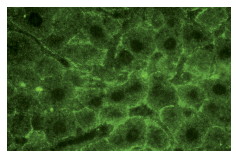
Immunofluorescence staining of normal mouse liver frozen section showing cytoplasmic staining.| Product Name | PKA IIβ reg Antibody (H-90) |
|---|---|
| Antibody Type | Primary Antibodies |
| Antigen Alias | epitope corresponding to amino acids 21-110 of PKA IIβ regulatory chain of human origin |
| Modification Notes | The second messenger cyclic AMP (cAMP) mediates diverse cellular re-sponses to external signals such as proliferation, ion transport, regulation of metabolism and gene transcription by activation of the cAMP-dependent protein kinase (cAPK or PKA). Activation of PKA occurs when cAMP binds to the two regulatory subunits of the tetrameric PKA holoenzyme resulting in release of active catalytic subunits. Three catalytic (C) subunits have been identified, designated C?, C? and C?, that each represent specific gene products. C? and C? are closely related (93% amino acid sequence similarity), whereas C? displays 83% and 79% similarity to C? and C?, respectively. Activation of transcription upon elevation of cAMP levels results from trans-location of PKA to the nucleus, where it phosphorylates the transcription factor cAMP response element binding protein (CREB) on Serine 133, which in turn leads to TFIIB binding to TATA-box-binding protein TBP1, thus linking phospho-CREB to the Pol II transcription initiation complex. |
| Clonality | Polyclonal |
|---|---|
| Isotype | IgG |
| Host Species | Rabbit |
| Tested Applications | WBIPIFELISA |
| recommended for detection of PKA IIβ reg of mouse, rat and human origin by WB, IP, IF and ELISA also reactive with additional species, including bovine: |
|
| Species Reactivity | HumanMouseRat |
| Concentration | 1mg/ml |
| Purification | Affinity purified |
| Alternative Names | epitope corresponding to amino acids 21-110 of PKA II&beta regulatory chain of human origin |
|---|---|
| Tissue Specificity | epitope corresponding to amino acids 21-110 of PKA IIβ regulatory chain of human origin |
| Entrez Gene | 5577 |
|---|
Application
Immunofluorescence staining of normal mouse liver frozen section showing cytoplasmic staining.| Application Notes | recommended for detection of PKA IIβ reg of mouse, rat and human origin by WB, IP, IF and ELISA also reactive with additional species, including bovine: |
|---|
| Form | Liquid |
|---|---|
| Storage Instructions | For short-term storage, store at 4° C. For long-term storage, aliquot and store at -20ºC or below. Avoid multiple freeze-thaw cycles. |
| Storage Buffer | phosphate buffered saline , pH 7.4, 150mM NaCl, 0.02% sodium azide and 50% glycerol. |


