Application
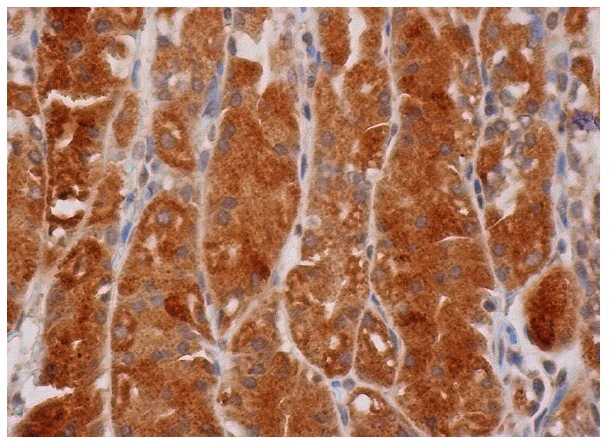
Immunoperoxidase staining of formalin fixed, paraffin-embedded human upper stomach tissue showing cytoplasmic staining of glandular cells.| Product Name | SSAT Antibody (H-77) |
|---|---|
| Antibody Type | Primary Antibodies |
| Antigen Alias | epitope corresponding to amino acids 95-171 mapping at the C-terminus of SSAT of human origin |
| Modification Notes | Polyamines are required for optimal growth and function of cells. Regulation of their cellular homeostasis is therefore tightly controlled. The key regulatory enzyme for polyamine catabolism is the spermidine/spermine N(1)-acetyltransferase (SSAT). Depletion of cellular polyamines has been associated with inhibition of growth and programmed cell death. SSAT first acetylates spermidine and spermine, which then are oxidized by polyamine oxidase to produce putrescine and spermidine, respectively. SSAT has been shown to suppress tumor outgrowth and be a potential target for therapeutic purposes. |
| Clonality | Polyclonal |
|---|---|
| Isotype | IgG |
| Host Species | Rabbit |
| Tested Applications | WBIPIFIHCELISA |
| recommended for detection of SSAT of mouse, rat and human origin by WB, IP, IF, IHC(P) and ELISA also reactive with additional species, including equine, canine, bovine, porcine and avian: |
|
| Species Reactivity | HumanMouseRat |
| Concentration | 1mg/ml |
| Purification | Affinity purified |
| Alternative Names | epitope corresponding to amino acids 95-171 mapping at the C-terminus of SSAT of human origin |
|---|---|
| Tissue Specificity | epitope corresponding to amino acids 95-171 mapping at the C-terminus of SSAT of human origin |
| Entrez Gene | 6303 |
|---|
Application
Immunoperoxidase staining of formalin fixed, paraffin-embedded human upper stomach tissue showing cytoplasmic staining of glandular cells.| Application Notes | recommended for detection of SSAT of mouse, rat and human origin by WB, IP, IF, IHC(P) and ELISA also reactive with additional species, including equine, canine, bovine, porcine and avian: |
|---|
| Form | Liquid |
|---|---|
| Storage Instructions | For short-term storage, store at 4° C. For long-term storage, aliquot and store at -20ºC or below. Avoid multiple freeze-thaw cycles. |
| Storage Buffer | phosphate buffered saline , pH 7.4, 150mM NaCl, 0.02% sodium azide and 50% glycerol. |


