Application
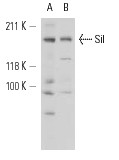
Western blot analysis of FADD phosphorylation in SW480 whole cell lysate.| Product Name | p-FADD Antibody (Ser 191) |
|---|---|
| Antibody Type | Primary Antibodies |
| Antigen Alias | epitope corresponding to phosphorylated Ser 191 of FADD of mouse origin |
| Modification | Phosphoralated |
| Modification Notes | In contrast to growth factors which promote cell proliferation, FAS ligand (FAS-L) and tumor necrosis factor (TNF) rapidly induce apoptosis. Cellular response to FAS-L and TNF is mediated by structurally related receptors containing a conserved “death domain” and belonging to the TNF receptor superfamily. TRADD, FADD and RIP are FAS/TNF-RI interacting proteins that contain a death domain homologous region (DDH). TRADD (TNF-RI-associated death domain) and FADD (FAS-associated death domain) are proteins that associate with the death domains of both FAS and TNF-RI via their DDH regions. Overexpression of TRADD leads to NFkB activation and apoptosis in the absence of TNF. Overexpression of FADD causes apoptosis, which can be blocked by the cow pox protein CrmA, suggesting that FADD lies upstream of ICE and possibly other serine proteases. The receptor interacting protein, RIP, associates with FAS exclusively via its DDH, and this association is abrogated in lpr mutants. Unlike TRADD and FADD, RIP contains a putative amino terminal kinase domain. |
| Clonality | Polyclonal |
|---|---|
| Isotype | IgG |
| Host Species | Rabbit |
| Tested Applications | WBIPIFELISA |
| recommended for detection of Ser 191 phosphorylated FADD of mouse and, to a lesser extent, human origin by WB, IP, IF and ELISA: |
|
| Species Reactivity | HumanMouseRat |
| Concentration | 1mg/ml |
| Purification | Affinity purified |
| Alternative Names | epitope corresponding to phosphorylated Ser 191 of FADD of mouse origin |
|---|---|
| Tissue Specificity | epitope corresponding to phosphorylated Ser 191 of FADD of mouse origin |
| Entrez Gene | 8772 |
|---|
Application
Western blot analysis of FADD phosphorylation in SW480 whole cell lysate.| Application Notes | recommended for detection of Ser 191 phosphorylated FADD of mouse and, to a lesser extent, human origin by WB, IP, IF and ELISA: |
|---|
| Form | Liquid |
|---|---|
| Storage Instructions | For short-term storage, store at 4° C. For long-term storage, aliquot and store at -20ºC or below. Avoid multiple freeze-thaw cycles. |
| Storage Buffer | phosphate buffered saline , pH 7.4, 150mM NaCl, 0.02% sodium azide and 50% glycerol. |


