Application
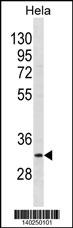
Western blot analysis of TRB-2 expression in non-transfected: (A) and mouse TRB-2 transfected: (B) 293T whole cell lysates.| Product Name | TRB-2 Antibody (H-53) |
|---|---|
| Antibody Type | Primary Antibodies |
| Antigen Alias | epitope corresponding to amino acids 11-63 mapping near the N-terminus of TRB-2 of human origin |
| Modification Notes | TRB-2 (Tribbles homolog 2), also known as TRIB2, C5FW or GS3955, is a cytoplasmic pro-apoptotic protein that belongs to the Tribbles subfamily of the Serine/Threonine protein kinase family. Members of the Tribbles subfamily, namely TRB-1, TRB-2 and TRB-3, contain a protein kinase-like or TRB domain that lacks the active site lysine and does not appear to display kinase activity. TRB proteins are induced by mitogens and interact with and are stabilized by MAPKKs. TRB proteins play an important function in the MAP kinase pathway, as is demonstrated by the inhibition of MAPK signaling in response to both over and underexpression of TRB proteins. TRB-1 is widely expressed with highest levels found in bone marrow, pancreas, skeletal muscle, peripheral blood leukocytes and thyroid gland; TRB-2 is predominantly expressed in peripheral blood leukocytes; and TRB-3 is found at highest levels in pancreas, bone marrow and peripheral blood leukocytes. |
| Clonality | Polyclonal |
|---|---|
| Isotype | IgG |
| Host Species | Rabbit |
| Tested Applications | WBIPIFELISA |
| recommended for detection of TRB-2 of mouse, rat and human origin by WB, IP, IF and ELISA also reactive with additional species, including equine, canine, bovine, porcine and avian: |
|
| Species Reactivity | HumanMouseRat |
| Concentration | 1mg/ml |
| Purification | Affinity purified |
| Alternative Names | epitope corresponding to amino acids 11-63 mapping near the N-terminus of TRB-2 of human origin |
|---|---|
| Tissue Specificity | epitope corresponding to amino acids 11-63 mapping near the N-terminus of TRB-2 of human origin |
| Entrez Gene | 28951 |
|---|
Application
Western blot analysis of TRB-2 expression in non-transfected: (A) and mouse TRB-2 transfected: (B) 293T whole cell lysates.| Application Notes | recommended for detection of TRB-2 of mouse, rat and human origin by WB, IP, IF and ELISA also reactive with additional species, including equine, canine, bovine, porcine and avian: |
|---|
| Form | Liquid |
|---|---|
| Storage Instructions | For short-term storage, store at 4° C. For long-term storage, aliquot and store at -20ºC or below. Avoid multiple freeze-thaw cycles. |
| Storage Buffer | phosphate buffered saline , pH 7.4, 150mM NaCl, 0.02% sodium azide and 50% glycerol. |


