Application
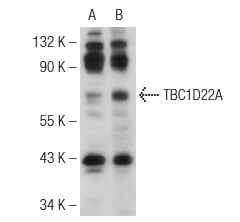
Western blot analysis of TBC1D22A expression in non-transfected: (A) and human TBC1D22A transfected: (B) 293T whole cell lysates.| Product Name | TBC1D22A Antibody (S-16) |
|---|---|
| Antibody Type | Primary Antibodies |
| Antigen Alias | epitope mapping within an internal region of TBC1D22A of human origin |
| Modification Notes | GTPase-activating proteins (GAPs) accelerate the intrinsic rate of GTP hydrolysis of Ras-related proteins, resulting in downregulation of their active form. TBC1D22A (TBC1 domain family, member 22A), also known as C22orf4, is a 517 amino acid protein that contains one Rab-GAP TBC domain and is thought to function as a GTPase-activating protein for Rab family members. Multiple isoforms of TBC1D22A exist due to alternative splicing events. The gene encoding TBC1D22A maps to human chromosome 22, which houses over 500 genes and is the second smallest human chromosome. Mutations in several of the genes that map to chromosome 22 are involved in the development of Phelan-McDermid syndrome, neurofibromatosis type 2, autism and schizophrenia. Additionally, translocations between chromosomes 9 and 22 may lead to the formation of the Philadelphia chromosome and the subsequent production of the novel fusion protein BCR-Abl, a potent cell proliferation activator found in several types of leukemias. |
| Clonality | Polyclonal |
|---|---|
| Isotype | IgG |
| Host Species | Rabbit |
| Tested Applications | WBIPIFELISA |
| recommended for detection of TBC1D22A of mouse, rat and human origin by WB, IP, IF and ELISA also reactive with additional species, including equine, canine and bovine: |
|
| Species Reactivity | HumanMouseRat |
| Concentration | 1mg/ml |
| Purification | Affinity purified |
| Alternative Names | epitope mapping within an internal region of TBC1D22A of human origin |
|---|---|
| Tissue Specificity | epitope mapping within an internal region of TBC1D22A of human origin |
| Entrez Gene | 25771 |
|---|
Application
Western blot analysis of TBC1D22A expression in non-transfected: (A) and human TBC1D22A transfected: (B) 293T whole cell lysates.| Application Notes | recommended for detection of TBC1D22A of mouse, rat and human origin by WB, IP, IF and ELISA also reactive with additional species, including equine, canine and bovine: |
|---|
| Form | Liquid |
|---|---|
| Storage Instructions | For short-term storage, store at 4° C. For long-term storage, aliquot and store at -20ºC or below. Avoid multiple freeze-thaw cycles. |
| Storage Buffer | phosphate buffered saline , pH 7.4, 150mM NaCl, 0.02% sodium azide and 50% glycerol. |


