Application
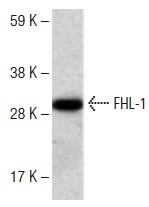
Western blot analysis of FHL-1 expression in human fetal muscle tissue extract.Application
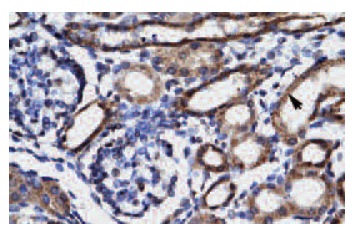
Immunoperoxidase staining of formalin-fixed, paraffin-embedded human kidney tissue showing cytoplasmic localization.| Product Name | FHL-1 Antibody (D-25) |
|---|---|
| Antibody Type | Primary Antibodies |
| Antigen Alias | recommended for detection of FHL-1 of mouse, rat and human origin by WB, IP, IF, IHC(P) and ELISA; also reactive with additional species, including canine |
| Modification Notes | The four-and-a-half-LIM domain (FHL) proteins include FHL-1 (SLIM1), FHL-2 (SLIM3), FHL-3 (SLIM2) and FHL-4. The signature “half-domain”, a single zinc finger domain located in the N-terminal region, differentiates FHLs from other LIM-only proteins, which have numbers of zinc fingers. Specific combinations of FHL proteins elicit selective activation of both CREB and CREM. Skeletal and cardiac muscle express FHL-1 in high levels as compared to the low level of expression in smooth muscle of the colon, small intestine and prostate. FHL-1 localizes to the cytosol of myoblasts, myotubes, and differentiated myocytes. FHL-2 is also located in cardiac and skeletal muscle, as well as in placenta and ovary tissues. FHL-3 is found in skeletal muscle, but absent in cardiac muscle. FHL-4 is expressed exclusively by the seminiferous epithelium of the testis, which suggests that FHL-4 is involved in spermatogenesis. The genetic loci for FHLs vary considerably despite similiar amino acid sequences among the FHL group. |
| Clonality | Polyclonal |
|---|---|
| Isotype | IgG |
| Host Species | Rabbit |
| Tested Applications | WBIPIFIHCELISA |
| WB:1:500~1:2000 IP:1:100~1:500 IF:1:200~1:500 IHC:1:50~1:200 Notes:Optimal dilutions/concentrations should be determined by the researcher. |
|
| Species Reactivity | HumanMouseRat |
| Concentration | 1mg/ml |
| Purification | Affinity purified |
| Alternative Names | recommended for detection of FHL-1 of mouse rat and human origin by WB IP IF IHC(P) and ELISA also reactive with additional species including canine |
|---|---|
| Tissue Specificity | recommended for detection of FHL-1 of mouse, rat and human origin by WB, IP, IF, IHC(P) and ELISA; also reactive with additional species, including canine |
| Entrez Gene | 2273 |
|---|
Application
Western blot analysis of FHL-1 expression in human fetal muscle tissue extract.
Application
Immunoperoxidase staining of formalin-fixed, paraffin-embedded human kidney tissue showing cytoplasmic localization.| Application Notes | WB:1:500~1:2000 IP:1:100~1:500 IF:1:200~1:500 IHC:1:50~1:200 Notes:Optimal dilutions/concentrations should be determined by the researcher. |
|---|
| Form | Liquid |
|---|---|
| Storage Instructions | For short-term storage, store at 4° C. For long-term storage, aliquot and store at -20ºC or below. Avoid multiple freeze-thaw cycles. |
| Storage Buffer | phosphate buffered saline , pH 7.4, 150mM NaCl, 0.02% sodium azide and 50% glycerol. |


