Application
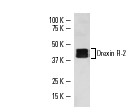
Western blot analysis of Orexin R-2 expression in Jurkat whole cell lysate.| Product Name | Orexin R-1/2 Antibody (H-300) |
|---|---|
| Antibody Type | Primary Antibodies |
| Antigen Alias | epitope corresponding to amino acids 126-425 mapping at the C-terminus of Orexin R-1 of human origin |
| Modification Notes | The hypothalamus is essential for maintaining homeostasis by integrating the vertebrate endocrine and nervous systems, thereby controlling temperature, thrist and hunger. Orexin-A and Orexin-B (also designated hypocretins) are hypothalamic neuropeptides that are derived from a single precursor, prepro-orexin, by proteolytic processing. These peptides bind to and activate two closely related, G protein-coupled receptors, designated Orexin receptor-1 (Orexin R-1) and Orexin receptor-2 (Orexin R-2). Orexin-A protein and prepro-orexin mRNA are localized to neurons within the lateral section of the hypothalamus, designated the “feeding center”. Prepro-orexin mRNA is upregulated during fasting, suggesting that orexins may play a role in the central feedback mechanism that regulates feeding behavior. Orexin has been shown to increase the release of GABA and glutamate from axons, a response seen as a result of most synaptic activities in the hypothalamic region. |
| Clonality | Polyclonal |
|---|---|
| Isotype | IgG |
| Host Species | Rabbit |
| Tested Applications | WBIPIFELISA |
| recommended for detection of Orexin R-1 and Orexin R-2 of mouse, rat and human origin by WB, IP, IF and ELISA also reactive with additional species, including equine, canine, bovine and porcine: |
|
| Species Reactivity | HumanMouseRat |
| Concentration | 1mg/ml |
| Purification | Affinity purified |
| Alternative Names | epitope corresponding to amino acids 126-425 mapping at the C-terminus of Orexin R-1 of human origin |
|---|---|
| Tissue Specificity | epitope corresponding to amino acids 126-425 mapping at the C-terminus of Orexin R-1 of human origin |
| Entrez Gene | 3061 |
|---|
Application
Western blot analysis of Orexin R-2 expression in Jurkat whole cell lysate.| Application Notes | recommended for detection of Orexin R-1 and Orexin R-2 of mouse, rat and human origin by WB, IP, IF and ELISA also reactive with additional species, including equine, canine, bovine and porcine: |
|---|
| Form | Liquid |
|---|---|
| Storage Instructions | For short-term storage, store at 4° C. For long-term storage, aliquot and store at -20ºC or below. Avoid multiple freeze-thaw cycles. |
| Storage Buffer | phosphate buffered saline , pH 7.4, 150mM NaCl, 0.02% sodium azide and 50% glycerol. |


