Application
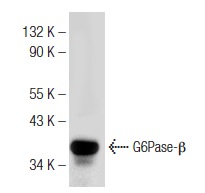
Western blot analysis of G6Pase-β expression in rat skeletal muscle tissue extract.| Product Name | G6Pase-β Antibody (H-143) |
|---|---|
| Antibody Type | Primary Antibodies |
| Antigen Alias | epitope corresponding to amino acids 188-255 mapping within and internal region of G6Pase-β of human origin |
| Modification Notes | Glucose-6-phosphatase (G6Pase), is a multicomponent enzyme system that hydrolyzes glucose-6-phosphate (G6P) in the final step of gluconeogenesis and gluconeolysis. G6Pase localizes to the endoplasmic reticulum, and while liver, kidney, and intestine are the only tissues that express the first identified isoform, G6Pase-å, a second form, designated G6Pase-∫, contributes to blood glucose homeostasis in a wider range of tissues. G6Pase-∫, also known as SCN4, UGRP or G6PC3 (glucose 6 phosphatase, catalytic, 3), is a 346 amino acid endoplasmic reticulum multi-pass membrane protein that is involved in carbohydrate biosynthesis and the gluconeogenesis pathway. Inhibited by vanadate, G6Pase-∫ hydrolyzes GP6 to glucose in the endoplasmic reticulum. Due to its necessary involvement in normal glucose metabolism, G6Pase-∫ may play an integral role in diabetes and glycogen storage diseases (GSDs). |
| Clonality | Polyclonal |
|---|---|
| Isotype | IgG |
| Host Species | Rabbit |
| Tested Applications | WBIPIFELISA |
| recommended for detection of G6Pase-β of mouse, rat and human origin by WB, IP, IF and ELISA also reactive with additional species, including equine, canine, bovine and porcine: |
|
| Species Reactivity | HumanMouseRat |
| Concentration | 1mg/ml |
| Purification | Affinity purified |
| Alternative Names | epitope corresponding to amino acids 188-255 mapping within and internal region of G6Pase-&beta of human origin |
|---|---|
| Tissue Specificity | epitope corresponding to amino acids 188-255 mapping within and internal region of G6Pase-β of human origin |
Application
Western blot analysis of G6Pase-β expression in rat skeletal muscle tissue extract.| Application Notes | recommended for detection of G6Pase-β of mouse, rat and human origin by WB, IP, IF and ELISA also reactive with additional species, including equine, canine, bovine and porcine: |
|---|
| Form | Liquid |
|---|---|
| Storage Instructions | For short-term storage, store at 4° C. For long-term storage, aliquot and store at -20ºC or below. Avoid multiple freeze-thaw cycles. |
| Storage Buffer | phosphate buffered saline , pH 7.4, 150mM NaCl, 0.02% sodium azide and 50% glycerol. |


