Application
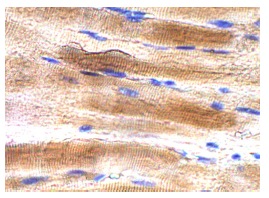
Western blot analysis of CENP-M expression in non-transfected: (A) and human CENP-M transfected: (B) 293T whole cell lysates.| Product Name | CENP-M Antibody (N-17) |
|---|---|
| Antibody Type | Primary Antibodies |
| Antigen Alias | epitope mapping at the N-terminus of CENP-M of human origin |
| Modification Notes | During mitosis, the transient assembly of the kinetochore occurs on a platform known as the centromere, a specialized chromatin structure that is comprised of various centromere proteins (CENPs). There are two multi-protein centromere complexes, known as CENPA-NAC (nucleosome-associated) and CENPA-CAD (nucleosome distal), which interact with one another to facilitate both the assembly and the activity of the centromere. CENP-M (Centromere protein M), also known as CENPM, ICEN39 or PANE1, is a 180 amino acid centromeric protein that localizes to the nucleus in non-confluent cells and to the cytoplasm in dividing or confluent cells. One of several components of the CENPA-NAC complex, CENP-M plays a crucial role in the assembly of the kinetochore and the subsequent chromosome segregation and progression through mitosis. Additionally, CENP-M is thought to be involved in the incorporation of newly synthesized CENP-A into centromeres. Three isoforms of CENP-M exist due to alternative splicing events. Isoform 3 is expressed in B-lineage chronic lymphocytic leukemia (B-CLL) cells, suggesting a possible role in carcinogenesis. |
| Clonality | Polyclonal |
|---|---|
| Isotype | IgG |
| Host Species | Rabbit |
| Tested Applications | WBIPIFELISA |
| recommended for detection of CENP-M of human origin by WB, IP, IF and ELISA also reactive with additional species, including equine, canine, bovine and porcine: |
|
| Species Reactivity | HumanMouseRat |
| Concentration | 1mg/ml |
| Purification | Affinity purified |
| Alternative Names | epitope mapping at the N-terminus of CENP-M of human origin |
|---|---|
| Tissue Specificity | epitope mapping at the N-terminus of CENP-M of human origin |
| Entrez Gene | 79019 |
|---|
Application
Western blot analysis of CENP-M expression in non-transfected: (A) and human CENP-M transfected: (B) 293T whole cell lysates.| Application Notes | recommended for detection of CENP-M of human origin by WB, IP, IF and ELISA also reactive with additional species, including equine, canine, bovine and porcine: |
|---|
| Form | Liquid |
|---|---|
| Storage Instructions | For short-term storage, store at 4° C. For long-term storage, aliquot and store at -20ºC or below. Avoid multiple freeze-thaw cycles. |
| Storage Buffer | phosphate buffered saline , pH 7.4, 150mM NaCl, 0.02% sodium azide and 50% glycerol. |


