Application
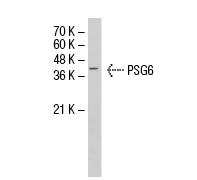
Western blot analysis of PSG6 expression in Hep G2 whole cell lysate.| Product Name | PSG6 Antibody (F-18) |
|---|---|
| Antibody Type | Primary Antibodies |
| Antigen Alias | raised against PSG6 of human origin |
| Modification Notes | Pregnancy-specific beta-1-glycoprotein 6 (PSG6) is a member of the PSG family, a group of closely related secreted glycoproteins that are highly expressed in fetal placental syncytiotrophoblast cells. The members of the PSG protein family all have a characteristic N-terminal domain that is homologous to the immunoglobulin variable region. PSGs become detectable in serum during the first two to three weeks of pregnancy and increase as the pregnancy progresses, eventually representing the most abundant fetal protein in the maternal blood at term. PSGs function to stimulate secretion of TH2-type cytokines from monocytes, and they may also modulate the maternal immune system during pregnancy, thereby protecting the semi-allotypic fetus from rejection. PSGs are commonly expressed in trophoblast tumors. Eleven human PSG proteins (PSG1-PSG11) have been described. |
| Clonality | Polyclonal |
|---|---|
| Isotype | IgG |
| Host Species | Rabbit |
| Tested Applications | WBIPELISA |
| recommended for detection of PSG6 of human origin by WB, IP and ELISA: |
|
| Species Reactivity | HumanMouseRat |
| Concentration | 1mg/ml |
| Purification | Affinity purified |
| Alternative Names | raised against PSG6 of human origin |
|---|---|
| Tissue Specificity | raised against PSG6 of human origin |
| Entrez Gene | 5675 |
|---|
Application
Western blot analysis of PSG6 expression in Hep G2 whole cell lysate.| Application Notes | recommended for detection of PSG6 of human origin by WB, IP and ELISA: |
|---|
| Form | Liquid |
|---|---|
| Storage Instructions | For short-term storage, store at 4° C. For long-term storage, aliquot and store at -20ºC or below. Avoid multiple freeze-thaw cycles. |
| Storage Buffer | phosphate buffered saline , pH 7.4, 150mM NaCl, 0.02% sodium azide and 50% glycerol. |


