Application
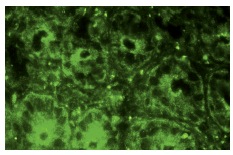
Immunofluorescence staining of normal mouse intestine frozen section showing membrane staining.| Product Name | Notch 2 Antibody (25-255) |
|---|---|
| Antibody Type | Primary Antibodies |
| Antigen Alias | epitope raised against amino acids 25-255 within the extracellular domain of Notch 2 of human origin |
| Modification Notes | The LIN-12/Notch family of transmembrane receptors is believed to play a central role in development by regulating cell fate decisions. To date, four Notch homologs have been identified in mammals and have been designated Notch 1, Notch 2, Notch 3 and Notch 4. The Notch genes are expressed in a variety of tissues in both the embryonic and adult organism, suggesting that the genes are involved in multiple signaling pathways. The Notch proteins have been found to be overexpressed or rearranged in human tumors. Ligands for Notch include Jagged, Jagged2 and Delta. Jagged can activate Notch and prevent myoblast differentiation by inhibiting the expression of muscle regulatory and structural genes. Jagged2 is thought to be involved in the development of various tissues whose development is dependent upon epithelial-mesenchymal interactions. Normal Delta expression is restricted to the adrenal gland and placenta. Delta expression has also been found in neuroendocrine tumors such as neuroblastomas and pheochromocytomas. |
| Clonality | Polyclonal |
|---|---|
| Isotype | IgG |
| Host Species | Rabbit |
| Tested Applications | WBIPIFELISA |
| recommended for detection of Notch 2 mouse, rat and human origin, and NOTCH2NL of human origin by WB, IP, IF and ELISA also reactive with additional species, including equine, canine, bovine and porcine: |
|
| Species Reactivity | HumanMouseRat |
| Concentration | 1mg/ml |
| Purification | Affinity purified |
| Alternative Names | epitope raised against amino acids 25-255 within the extracellular domain of Notch 2 of human origin |
|---|---|
| Tissue Specificity | epitope raised against amino acids 25-255 within the extracellular domain of Notch 2 of human origin |
| Entrez Gene | 4853 |
|---|
Application
Immunofluorescence staining of normal mouse intestine frozen section showing membrane staining.| Application Notes | recommended for detection of Notch 2 mouse, rat and human origin, and NOTCH2NL of human origin by WB, IP, IF and ELISA also reactive with additional species, including equine, canine, bovine and porcine: |
|---|
| Form | Liquid |
|---|---|
| Storage Instructions | For short-term storage, store at 4° C. For long-term storage, aliquot and store at -20ºC or below. Avoid multiple freeze-thaw cycles. |
| Storage Buffer | phosphate buffered saline , pH 7.4, 150mM NaCl, 0.02% sodium azide and 50% glycerol. |


