Application
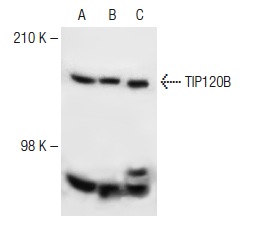
Western blot analysis of TIP120B expression in C2C12 (A) and Sol8 (B) whole cell lysates and mouse brain tissue extract (C).| Product Name | TIP120B Antibody (R-140) |
|---|---|
| Antibody Type | Primary Antibodies |
| Antigen Alias | epitope corresponding to amino acids 431-570 mapping to an internal region of TIP120B of rat origin |
| Modification Notes | TATA-binding protein (TBP) forms complexes with various nuclear proteins and is a target for various transcriptional regulators, such as TIP120. The two members of the TIP120 family of proteins, TIP120A and TIP120B, are TBP-Interacting Proteins that function as global activators in transcriptional regulation. TIP120A is a ubiqitously expressed protein isolated from rat liver nuclear extracts, originally named TIP120. TIP120B is a TIP-120A-like protein that is expressed specifically in muscle tissues. TIP120A binds directly to TBP and a particular subunit of RNA polymerases (RNAP) to facilitate specific integration of RNAP II into the preinitiation complex (PIC). In addition to being a transcription factor of TBP, the chaperone-like activity toward the RNA polymerases demonstrates that TIP120 regulates the amplification of multiple gene expression. |
| Clonality | Polyclonal |
|---|---|
| Isotype | IgG |
| Host Species | Rabbit |
| Tested Applications | WBIPIFELISAGSChIP |
| recommended for detection of TIP120B of mouse, rat and human origin by WB, IP, IF and ELISA also reactive with additional species, including equine, canine, bovine and porcine: |
|
| Species Reactivity | HumanMouseRat |
| Concentration | 1mg/ml |
| Purification | Affinity purified |
| Alternative Names | epitope corresponding to amino acids 431-570 mapping to an internal region of TIP120B of rat origin |
|---|---|
| Tissue Specificity | epitope corresponding to amino acids 431-570 mapping to an internal region of TIP120B of rat origin |
| Entrez Gene | 23066 |
|---|
Application
Western blot analysis of TIP120B expression in C2C12 (A) and Sol8 (B) whole cell lysates and mouse brain tissue extract (C).| Application Notes | recommended for detection of TIP120B of mouse, rat and human origin by WB, IP, IF and ELISA also reactive with additional species, including equine, canine, bovine and porcine: |
|---|
| Form | Liquid |
|---|---|
| Storage Instructions | For short-term storage, store at 4° C. For long-term storage, aliquot and store at -20ºC or below. Avoid multiple freeze-thaw cycles. |
| Storage Buffer | phosphate buffered saline , pH 7.4, 150mM NaCl, 0.02% sodium azide and 50% glycerol. |


