Application
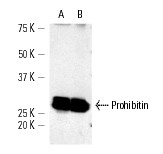
Western blot analysis of glypican-5 expression in non-transfected: (A) and human glypican-5 transfected: (B) 293T whole cell lysates.| Product Name | glypican-5 Antibody (L-20) |
|---|---|
| Antibody Type | Primary Antibodies |
| Antigen Alias | epitope mapping within an internal region of glypican-5 of human origin |
| Modification Notes | Glypicans are thought to activate or control the activity of morphogens and growth factors, thereby influencing cellular division, regulation of cell growth and differentiation. Neuronal growth and repair are also thought to be controlled by glypicans. Glypican-5 is also known as GPC5 and is a 572 amino acid protein. Glypican-5 is primarily expressed in adult brain tissue (where it is localized to neurons), but is also detected in fetal brain, lung and liver. Glypican-5 is a member of the glypican-related integral membrane proteoglycan family (GRIPS), which is characterized as having a core protein that is able to use glycosyl phosphatidylinositol to attach to the cytoplasmic membrane. Upregulation of glypican-5 has been found in active multiple sclerosis plaques, suggesting that glypican-5 may be involved in pathogenesis of multiple sclerosis. Upregulation of glypican-5 has also been recognized as having a strong correlation with lymphomas, as well as other tumors. |
| Clonality | Polyclonal |
|---|---|
| Isotype | IgG |
| Host Species | Rabbit |
| Tested Applications | WBIPIFELISA |
| recommended for detection of glypican-5 of mouse, rat and human origin by WB, IP, IF and ELISA non cross-reactive with other glypican family members also reactive with additional species, including equine, canine, bovine and porcine: |
|
| Species Reactivity | HumanMouseRat |
| Concentration | 1mg/ml |
| Purification | Affinity purified |
| Alternative Names | epitope mapping within an internal region of glypican-5 of human origin |
|---|---|
| Tissue Specificity | epitope mapping within an internal region of glypican-5 of human origin |
| Entrez Gene | 2262 |
|---|
Application
Western blot analysis of glypican-5 expression in non-transfected: (A) and human glypican-5 transfected: (B) 293T whole cell lysates.| Application Notes | recommended for detection of glypican-5 of mouse, rat and human origin by WB, IP, IF and ELISA non cross-reactive with other glypican family members also reactive with additional species, including equine, canine, bovine and porcine: |
|---|
| Form | Liquid |
|---|---|
| Storage Instructions | For short-term storage, store at 4° C. For long-term storage, aliquot and store at -20ºC or below. Avoid multiple freeze-thaw cycles. |
| Storage Buffer | phosphate buffered saline , pH 7.4, 150mM NaCl, 0.02% sodium azide and 50% glycerol. |


