Application
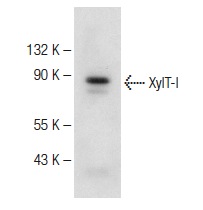
Western blot analysis of XylT-I expression in JAR whole cell lysate.| Product Name | XylT-I Antibody (H-74) |
|---|---|
| Antibody Type | Primary Antibodies |
| Antigen Alias | epitope corresponding to amino acids 871-944 mapping near the C-terminus of XylT-I of human origin |
| Modification Notes | Xylosyltransferase-I (XylT-I), also designated UDP-D-xylose:proteoglycan core protein b-D-xylosyltransferase 1, is a glycoprotein that catalyzes the transfer of UDP-xylose to serine residues within XT recognition sequences of target proteins. Addition of xylose to the core protein is a requirement for the biosynthesis of the glycosaminoglycan chains that are characteristic of proteoglycans. Xylosyltransferase proteins, which can be secreted, display activity in sternal cartilage chondrocytes, chondrosarcoma, nasal septum tumor and choriocarcinoma cells. XYlT-I is widely expressed, with higher levels of expression detected in placenta, kidney and pancreas, and lower levels of expression observed in skeletal muscle. Xylosyltransferase-II (XylT-II), also designated UDP-D-xylose:proteoglycan core protein b-D-xylosyltransferase 2, is also widely expressed, with higher levels of expression detected in kidney and pancreas. |
| Clonality | Polyclonal |
|---|---|
| Isotype | IgG |
| Host Species | Rabbit |
| Tested Applications | WBIPIFELISA |
| recommended for detection of XylT-I of mouse, rat and human origin by WB, IP, IF and ELISA also reactive with additional species, including equine, canine, bovine and porcine: |
|
| Species Reactivity | HumanMouseRat |
| Concentration | 1mg/ml |
| Purification | Affinity purified |
| Alternative Names | epitope corresponding to amino acids 871-944 mapping near the C-terminus of XylT-I of human origin |
|---|---|
| Tissue Specificity | epitope corresponding to amino acids 871-944 mapping near the C-terminus of XylT-I of human origin |
| Entrez Gene | 64131 |
|---|
Application
Western blot analysis of XylT-I expression in JAR whole cell lysate.| Application Notes | recommended for detection of XylT-I of mouse, rat and human origin by WB, IP, IF and ELISA also reactive with additional species, including equine, canine, bovine and porcine: |
|---|
| Form | Liquid |
|---|---|
| Storage Instructions | For short-term storage, store at 4° C. For long-term storage, aliquot and store at -20ºC or below. Avoid multiple freeze-thaw cycles. |
| Storage Buffer | phosphate buffered saline , pH 7.4, 150mM NaCl, 0.02% sodium azide and 50% glycerol. |


