Application
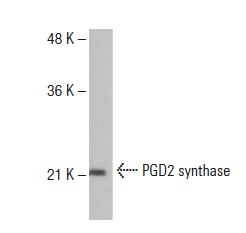
Western blot analysis of PGD2 synthase expression in Hep G2 whole cell lysate.Application
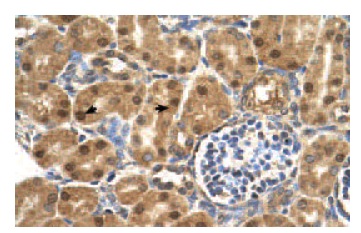
Immunoperoxidase staining of formalin-fixed, paraffin-embedded human kidney tissue showing nuclear and cytoplasmic localization.| Product Name | PGD2 synthase Antibody (F-24) |
|---|---|
| Antibody Type | Primary Antibodies |
| Antigen Alias | recommended for detection of PGD2 synthase of human origin by WB, IP, IF, IHC(P) and ELISA |
| Modification Notes | Human PGD synthase is the key enzyme for production of the D and J series of prostanoids in the immune system and mast cells. This enzyme is the first member of the sigma class glutathione S-transferases (GST) from vertebrates and contains a prominent cleft as the active site, which is unique among members of the GST superfamily. The human PGD synthase gene, which maps to chromosome 4q22.3, is expressed in a species-specific manner. For instance, the human gene is widely distributed, whereas the mouse gene is only expressed in oviduct and skin. Human PGD synthase is expressed in the cytoplasm of human megakaryoblastic CMK cells prior to differentiation into platelets, which have no PGD synthase activity. Another member of the PGD synthase family, PGD2 synthase, catalyzes the conversion of PGH2 to PGD2 and is essential for the synthesis of PGD2 in the brain. Unlike PGD synthase, PGD2 synthase is not dependent on the presence of glutathione for its activity. The human PGD2 synthase gene maps to chromosome 9q34.3. |
| Clonality | Polyclonal |
|---|---|
| Isotype | IgG |
| Host Species | Rabbit |
| Tested Applications | WBIPIFIHCELISA |
| WB:1:500~1:2000 IP:1:100~1:500 IF:1:200~1:500 IHC:1:50~1:200 Notes:Optimal dilutions/concentrations should be determined by the researcher. |
|
| Species Reactivity | HumanMouseRat |
| Concentration | 1mg/ml |
| Purification | Affinity purified |
| Alternative Names | recommended for detection of PGD2 synthase of human origin by WB IP IF IHC(P) and ELISA |
|---|---|
| Tissue Specificity | recommended for detection of PGD2 synthase of human origin by WB, IP, IF, IHC(P) and ELISA |
| Entrez Gene | 5730 |
|---|
Application
Western blot analysis of PGD2 synthase expression in Hep G2 whole cell lysate.
Application
Immunoperoxidase staining of formalin-fixed, paraffin-embedded human kidney tissue showing nuclear and cytoplasmic localization.| Application Notes | WB:1:500~1:2000 IP:1:100~1:500 IF:1:200~1:500 IHC:1:50~1:200 Notes:Optimal dilutions/concentrations should be determined by the researcher. |
|---|
| Form | Liquid |
|---|---|
| Storage Instructions | For short-term storage, store at 4° C. For long-term storage, aliquot and store at -20ºC or below. Avoid multiple freeze-thaw cycles. |
| Storage Buffer | phosphate buffered saline , pH 7.4, 150mM NaCl, 0.02% sodium azide and 50% glycerol. |


