Application
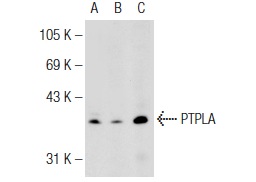
Western blot analysis of PTPLA expression in Sol8 (A), B16-F0 (B) and M1 (C) whole cell lysates.| Product Name | PTPLA Antibody (F-12) |
|---|---|
| Antibody Type | Primary Antibodies |
| Antigen Alias | epitope mapping within an internal region of PTPLA of mouse origin |
| Modification Notes | PTPLA (protein tyrosine phosphatase-like (proline instead of catalytic arginine), member A), also known as CAP (cementum attachment protein), is a 288 amino acid multi-pass membrane protein that is highly expressed in myocardium, and to a lesser extent in skeletal and smooth muscular tissues. PTPLA is a member of the protein tyrosine phosphatase (PTP) family of proteins, which are known to be signaling molecules that regulate signal transduction pathways leading to cell growth, differentiation and oncogenic transformation. PTPs mediate the dephosphorylation of phosphotyrosine. The tissue specific expression of PTPLA in the developing and adult heart suggests a role in regulating cardiac development and differentiation. PTPLA exist as two alternatively spliced isoforms and is encoded by a gene located on human chromosome 10, which houses over 1,200 genes and comprises nearly 4.5% of the human genome. |
| Clonality | Polyclonal |
|---|---|
| Isotype | IgG |
| Host Species | Rabbit |
| Tested Applications | WBIPIFELISA |
| recommended for detection of PTPLA of mouse, rat and human origin by WB, IP, IF and ELISA non cross-reactive with PTPLAD2 also reactive with additional species, including equine, canine, bovine and porcine: |
|
| Species Reactivity | HumanMouseRat |
| Concentration | 1mg/ml |
| Purification | Affinity purified |
| Alternative Names | epitope mapping within an internal region of PTPLA of mouse origin |
|---|---|
| Tissue Specificity | epitope mapping within an internal region of PTPLA of mouse origin |
| Entrez Gene | 9200 |
|---|
Application
Western blot analysis of PTPLA expression in Sol8 (A), B16-F0 (B) and M1 (C) whole cell lysates.| Application Notes | recommended for detection of PTPLA of mouse, rat and human origin by WB, IP, IF and ELISA non cross-reactive with PTPLAD2 also reactive with additional species, including equine, canine, bovine and porcine: |
|---|
| Form | Liquid |
|---|---|
| Storage Instructions | For short-term storage, store at 4° C. For long-term storage, aliquot and store at -20ºC or below. Avoid multiple freeze-thaw cycles. |
| Storage Buffer | phosphate buffered saline , pH 7.4, 150mM NaCl, 0.02% sodium azide and 50% glycerol. |


