Application
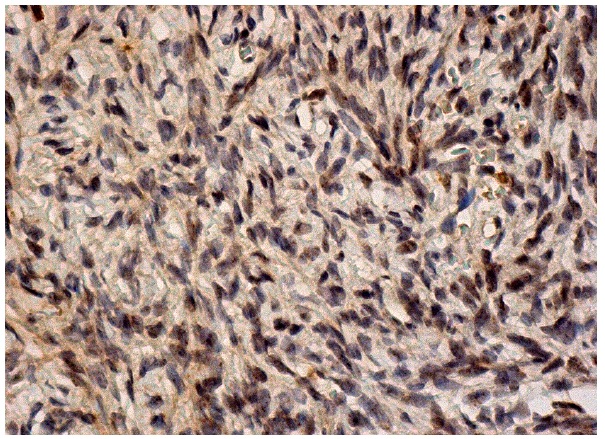
Immunoperoxidase staining of formalin fixed, paraffin-embedded human ovary tissue showing nuclear staining of ovarian stroma cells.| Product Name | LSD1 Antibody (H-220) |
|---|---|
| Antibody Type | Primary Antibodies |
| Modification Notes | Histone methylation regulates chromatin structure and transcription and maintains an epigenetic state of the cell. Histone methylation is dynamically regulated by histone methylases and demethylases. Lysine-specific histone demethylase 1 (LSD1), also designated BHC110, is a flavin-dependent amine oxidase which catalyzes the removal of one or two methyl groups from the methyl-lysine-4 side chain of Histone H3. The LSD1 protein contains a SWIRM domain, a FAD-binding motif and an amine oxidase domain. Association with CoREST, a SANT domain-containing corepressor, positively regulates LSD1. CoREST mediates the demethylation ability of LSD1 and protects it from proteasomal degradation in vivo. PHF21A (also designated BCH80), a PHD domain-containing protein, inhibits activity of LSD1/CoREST mediated de-methylation. The LSD1 protein also co-localizes with the androgen receptor in human prostate tumor cells and in unaffected prostate cells, stimulating androgen-receptor-dependent transcription. |
| Clonality | Polyclonal |
|---|---|
| Isotype | IgG |
| Host Species | Rabbit |
| Tested Applications | WBIPIFIHCELISAGSChIP |
| recommended for detection of LSD1 of mouse, rat and human origin by WB, IP, IF, IHC(P) and ELISA also reactive with additional species, including equine, canine, bovine, porcine and avian | |
| Species Reactivity | HumanMouseRat |
| Concentration | 1mg/ml |
| Purification | Affinity purified |
| Alternative Names | epitope corresponding to amino acids 581-800 mapping near the C-terminus of LSD1 of human origin |
|---|---|
| Tissue Specificity | epitope corresponding to amino acids 581-800 mapping near the C-terminus of LSD1 of human origin |
| Entrez Gene | 23028 |
|---|
Application
Immunoperoxidase staining of formalin fixed, paraffin-embedded human ovary tissue showing nuclear staining of ovarian stroma cells.| Application Notes | recommended for detection of LSD1 of mouse, rat and human origin by WB, IP, IF, IHC(P) and ELISA also reactive with additional species, including equine, canine, bovine, porcine and avian |
|---|
| Form | Liquid |
|---|---|
| Storage Instructions | For short-term storage, store at 4° C. For long-term storage, aliquot and store at -20ºC or below. Avoid multiple freeze-thaw cycles. |
| Storage Buffer | phosphate buffered saline , pH 7.4, 150mM NaCl, 0.02% sodium azide and 50% glycerol. |


